Tell us about the job
Takes about a minute. No obligation.
Gas venting, combustion air, and the flue connection are fixed by what fuel the house already runs on, and a contractor has to confirm all three before a replacement water heater goes on order. Utility gas heats more occupied homes in Hot Springs County, Wyoming than any other fuel, at 64.7% (2020-2024 ACS 5-year). That means most homes here get a gas-fired unit, and the installation has to account for existing vent routing, draft conditions, and whether the current flue can serve the new heater's BTU rating. A mismatch there is not a minor adjustment. It requires rerunning the vent, which adds time and changes the scope of what was quoted.
Older electrical panels are sized for loads that made sense when the house was first wired, and a new water heater draws more than what many of those panels were built to carry. Half the homes in Hot Springs County, Wyoming were built in 1974 or earlier (2020-2024 ACS 5-year). A contractor quoting a water heater installation here checks the panel before anything else, because an undersized service means the job includes an electrical upgrade whether the homeowner expected one or not. That is a different scope and a different bill than a simple swap.
What a Water Heater Installation Covers
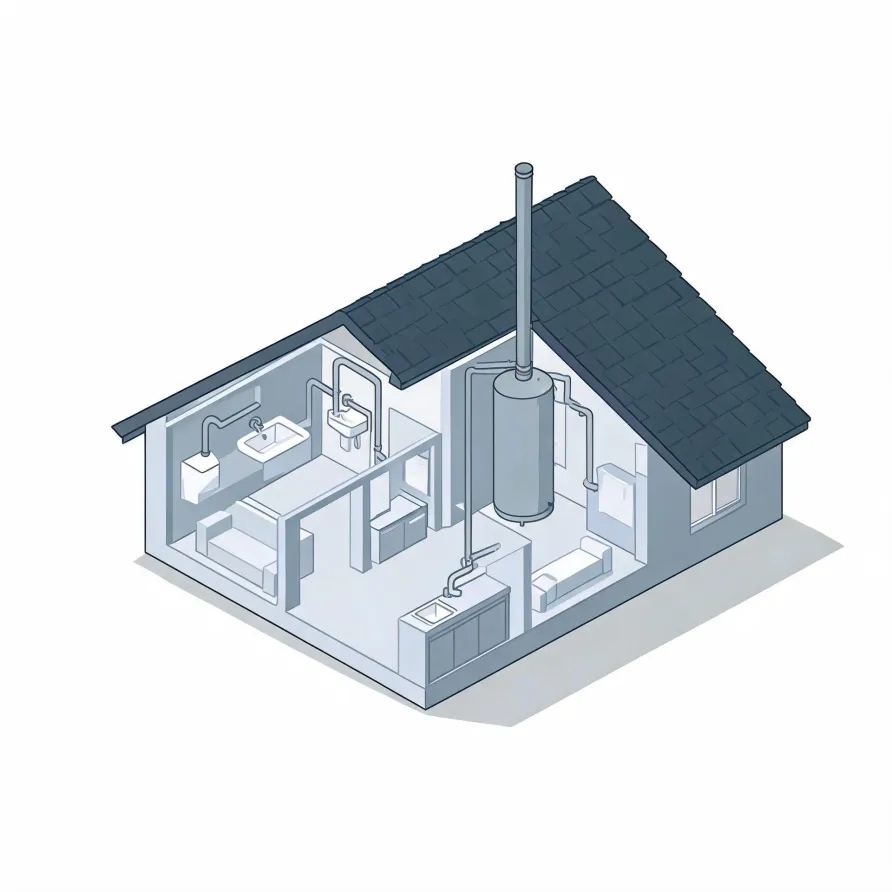
The tank or tankless unit is the heart of the system. A storage-tank water heater sits in a utility room, basement, or garage and holds a reservoir of heated water ready for use. A tankless unit mounts to a wall and heats water on demand as it passes through.
The pressure relief valve attaches directly to the tank and opens if internal pressure climbs too high. A cold-water inlet line and a hot-water outlet line connect the unit to the home's plumbing supply. The flue or exhaust vent runs from the unit to an exterior wall or the roof, carrying combustion gases out of the house.
The drawing shows a general layout of these components, and a licensed contractor determines what applies to the specific setup in your home.
Find a contractor in Hot Springs CountyHot Springs County, Wyoming, by the numbers
149 severe weather events were recorded in Hot Springs County, Wyoming between 2015 and 2024.
NOAA National Centers for Environmental Information, Storm Events Database, bulk CSV export, events 2015-01-01 through 2024-12-31.Half the homes in Hot Springs County, Wyoming were built in 1974 or earlier (2020-2024 ACS 5-year).
U.S. Census Bureau, 2020-2024 American Community Survey 5-Year EstimatesHot Springs County, Wyoming holds 2,461 housing units (2020-2024 ACS 5-year).
U.S. Census Bureau, 2020-2024 American Community Survey 5-Year EstimatesOwners occupy 72.7% of the occupied homes in Hot Springs County, Wyoming (2020-2024 ACS 5-year).
U.S. Census Bureau, 2020-2024 American Community Survey 5-Year EstimatesSevere Weather Events in Hot Springs County
Extreme weather puts a direct load on water heating equipment, shortening service life and raising the demand on installations that were not sized for local conditions. What happens in Hot Springs County shapes what a water heater here needs to do.
149 severe weather events, 2015–2024. Source: NOAA National Centers for Environmental Information, Storm Events Database.