Tell us about the job
Takes about a minute. No obligation.
Gas water heater installation in Natrona County is not a generic swap. The venting path, combustion air supply, and gas line capacity all have to be confirmed before a contractor can quote a replacement that will actually pass inspection. Utility gas heats more occupied homes in Natrona County, Wyoming than any other fuel, at 71.7% (2020-2024 ACS 5-year). That share means nearly every home a contractor walks into here is already running a gas appliance, and the existing venting and gas supply lines reflect that history. A new unit has to match what the home can deliver in combustion air and what the flue can safely carry, and those are site-specific checks, not assumptions a contractor carries in from the last job.
The electrical service panel in much of this county's housing stock was built for a smaller load than a modern water heater draws. Half the homes in Natrona County, Wyoming were built in 1977 or earlier (2020-2024 ACS 5-year). A contractor quoting a water heater installation has to open that panel early, because undersized service means the quote changes before the equipment is ever selected. The breaker capacity, the available circuits, and the gauge of the wire already in the walls are what decide how the job goes.
What a Water Heater Installation Covers
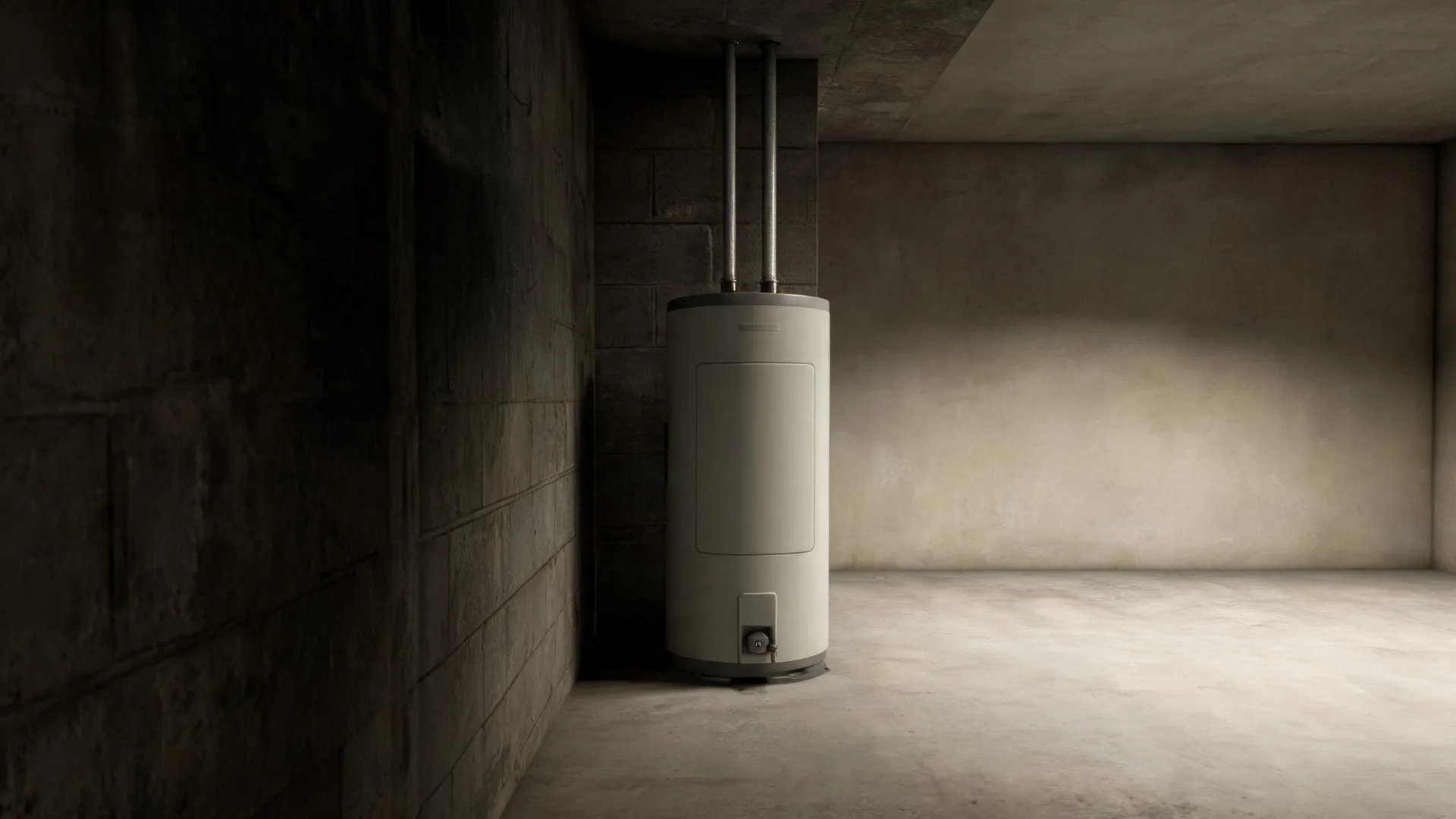
The tank or unit itself sits in a utility room, basement, or garage and holds the water your household draws on whenever a tap opens. A contractor sets it in place, connects it to the cold supply line that feeds it, and ties the hot outlet line into the pipes that run through the walls to every fixture.
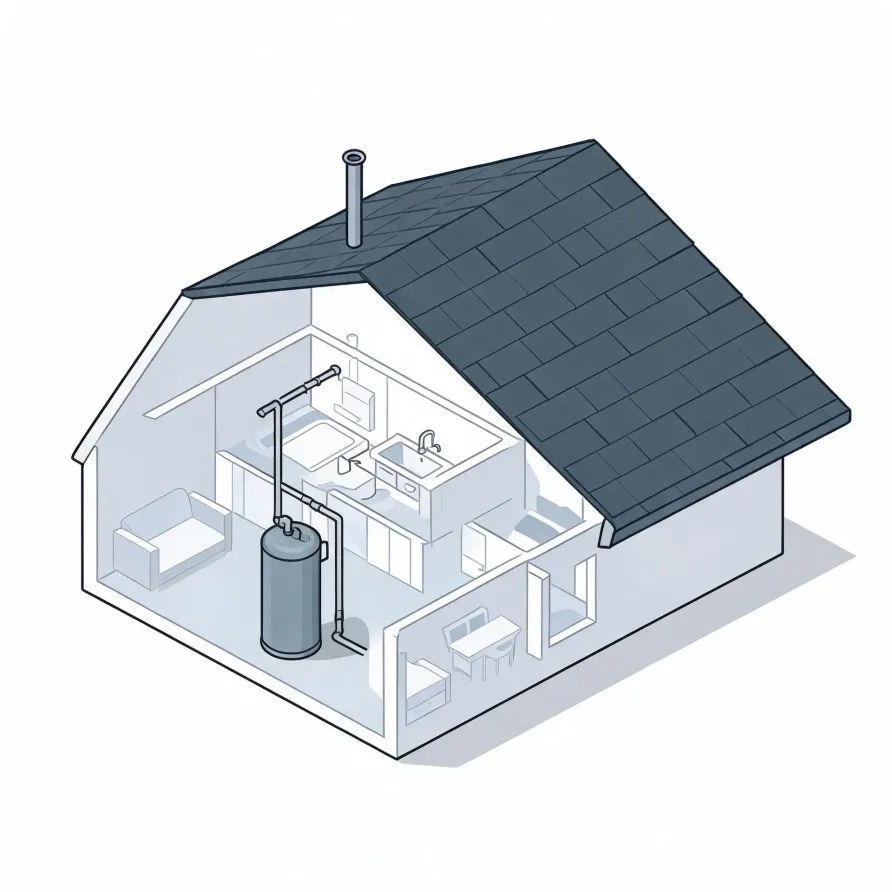
A pressure relief valve mounts directly on the unit and opens automatically if pressure inside climbs too high. A drain line runs from that valve to a safe discharge point, and an expansion tank sometimes sits on the supply side to absorb pressure spikes the main lines would otherwise carry.
The drawing shows the general layout of these components, and a licensed contractor determines which of them apply and how they connect in your particular house.
Find a contractor in Natrona CountyNatrona County by the Numbers
462 severe weather events were recorded in Natrona County, Wyoming between 2015 and 2024.
NOAA National Centers for Environmental Information, Storm Events Database, bulk CSV export, events 2015-01-01 through 2024-12-31.Half the homes in Natrona County, Wyoming were built in 1977 or earlier (2020-2024 ACS 5-year).
U.S. Census Bureau, 2020-2024 American Community Survey 5-Year EstimatesNatrona County, Wyoming holds 37,309 housing units (2020-2024 ACS 5-year).
U.S. Census Bureau, 2020-2024 American Community Survey 5-Year EstimatesOwners occupy 73.7% of the occupied homes in Natrona County, Wyoming (2020-2024 ACS 5-year).
U.S. Census Bureau, 2020-2024 American Community Survey 5-Year EstimatesSevere Weather Events in Natrona County
Water heaters work harder when outdoor conditions push household demand and stress plumbing systems. How often that happens in Natrona County shapes the wear a unit accumulates and what a contractor needs to account for when sizing and installing a replacement.
462 severe weather events, 2015–2024. Source: NOAA National Centers for Environmental Information, Storm Events Database.