


Why your water heater makes popping noises in Wyoming

Once you send the form, finding a pro is off your list.

Hand it off

The popping comes from sediment sitting at the bottom of your tank. Most homes in Wyoming run on hard well water or municipal supply with a fair mineral load, and that mineral content settles out as scale over time, building up on the bottom of the tank where the gas burner heats it. When the burner fires, water trapped under and inside that layer of sediment turns to steam, and the pops you hear are those pockets of steam breaking loose through the scale. It's louder in homes where the water heater runs harder, and if yours sees heavy use, the buildup collects faster. Left alone, that sediment layer keeps growing, and the burner has to work through it to heat the water above, which wears on the tank over time. The noise itself isn't dangerous today, but it's telling you the tank needs a flush, and the longer that sediment sits, the more it can shorten the life of the tank or lead to a bigger repair later.

59% of homes statewide heat with gas

Most houses in Wyoming heat water with gas, same as the furnace. A gas water heater fires that burner right under the tank, so sediment sitting on the bottom sits directly over the flame. That's what pops and cracks as the burner cycles on.

ACS 2020-2024 5-year B25040

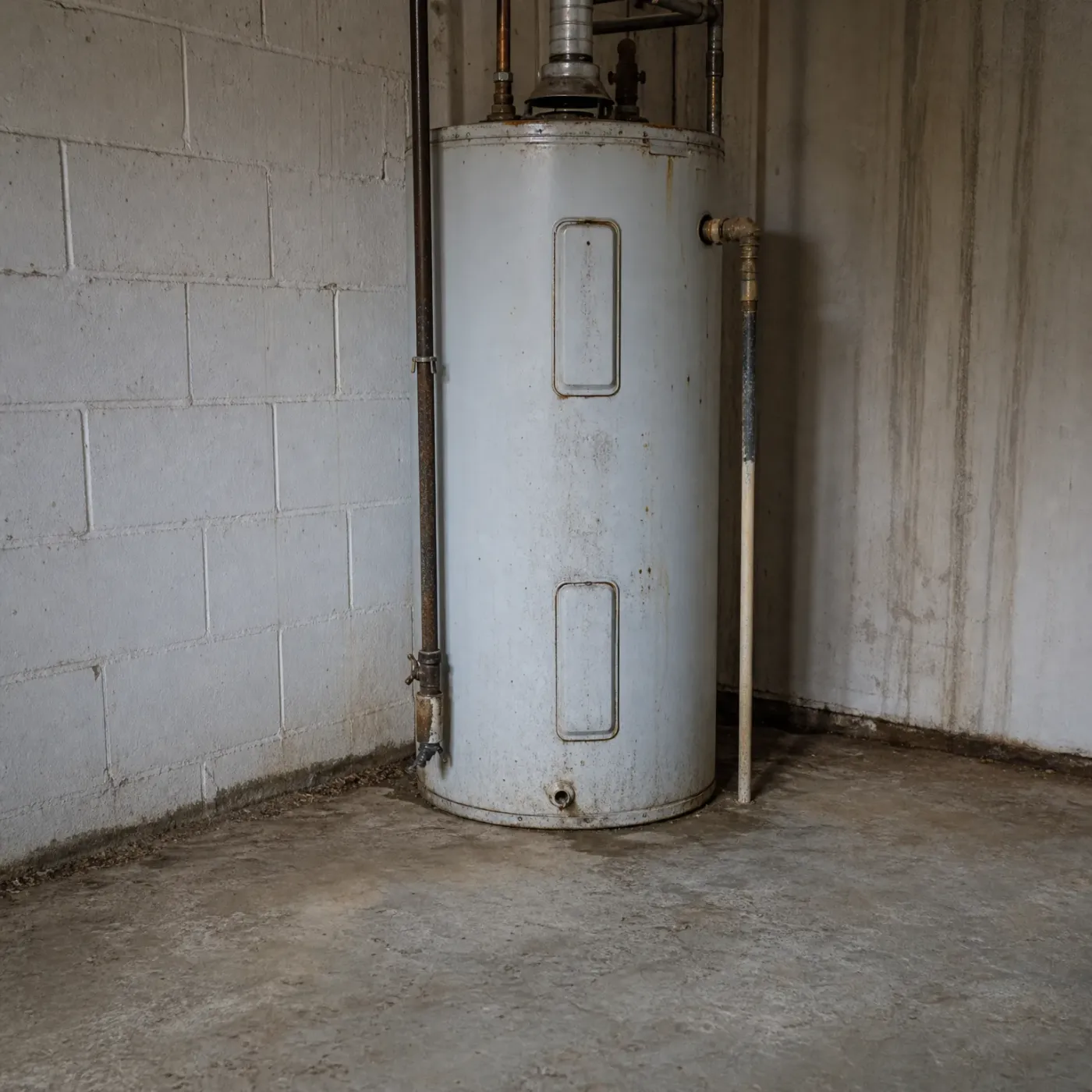
A rusting gas water heater with copper and steel pipes stands against a concrete block wall on a bare concrete floor.
Before you get your water heater repair
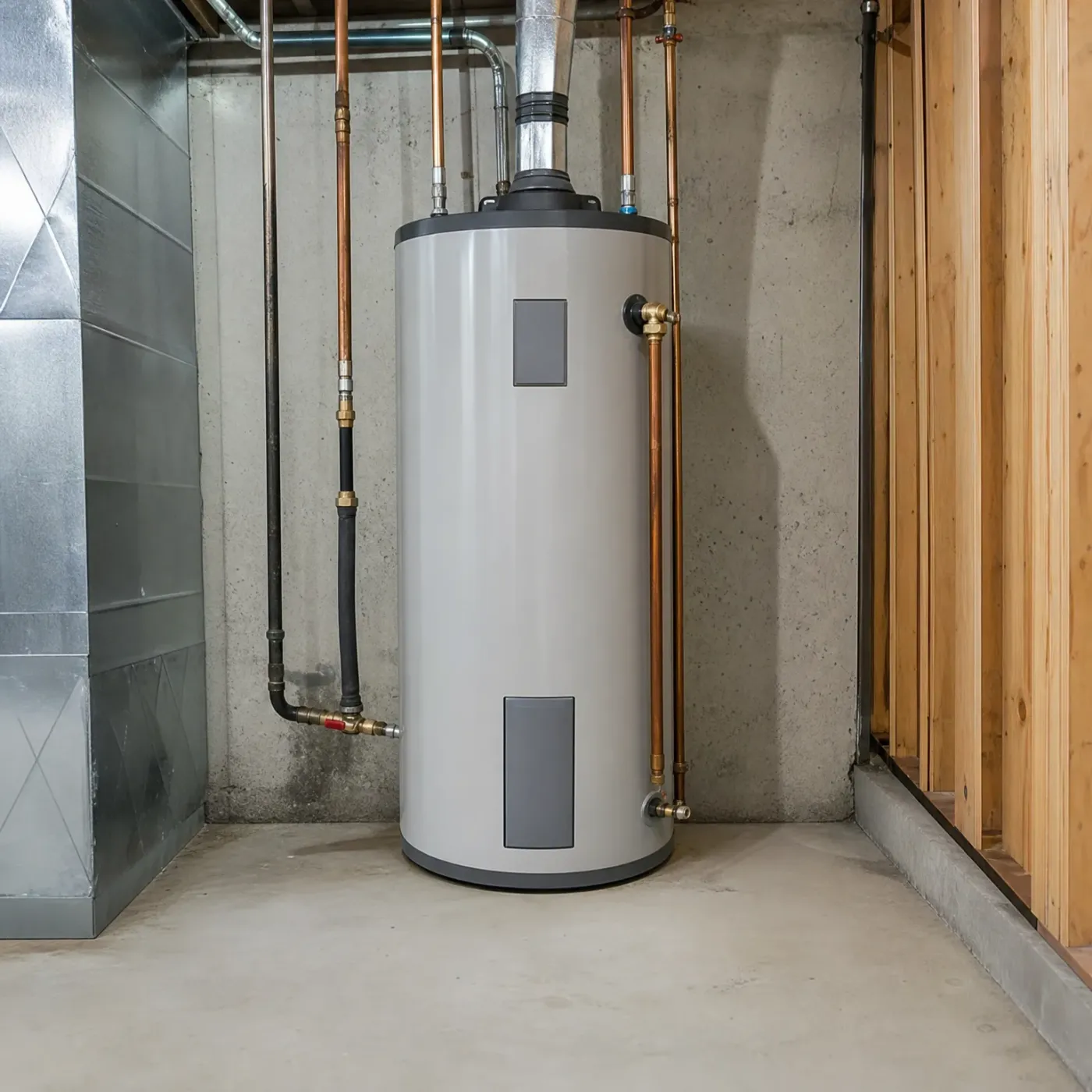
A gray cylindrical water heater stands in a basement corner against a concrete wall, with copper pipes, insulated flex lines, a metal flue, and insulated wall framing with ductwork to the right.
After you get your water heater repair

Is this popping actually something to worry about?

You'll hear it most when the burner first kicks on, a series of knocks or pops from somewhere low in the tank, sometimes loud enough to notice from another room. The tank may take longer to deliver hot water than it used to, or run out sooner than it should for the size you have. Left alone, that sediment layer keeps the burner working harder to heat water through it, and over time it can scorch the bottom of the tank itself. That's the difference between a repair now and a full tank replacement later.

A gray cylindrical water heater standing in a basement corner against a concrete wall, with copper and black pipes, a metal flue, and ductwork nearby, next to wood framing on the right.

Popping, left alone

The noise doesn't damage the tank by itself, but the sediment causing it does. Scale sitting under the flame insulates the steel from the water above it, so the burner runs longer to get the same heat. Left for a couple of years, that layer thickens and the tank wall underneath takes the brunt of the heat instead of the water.
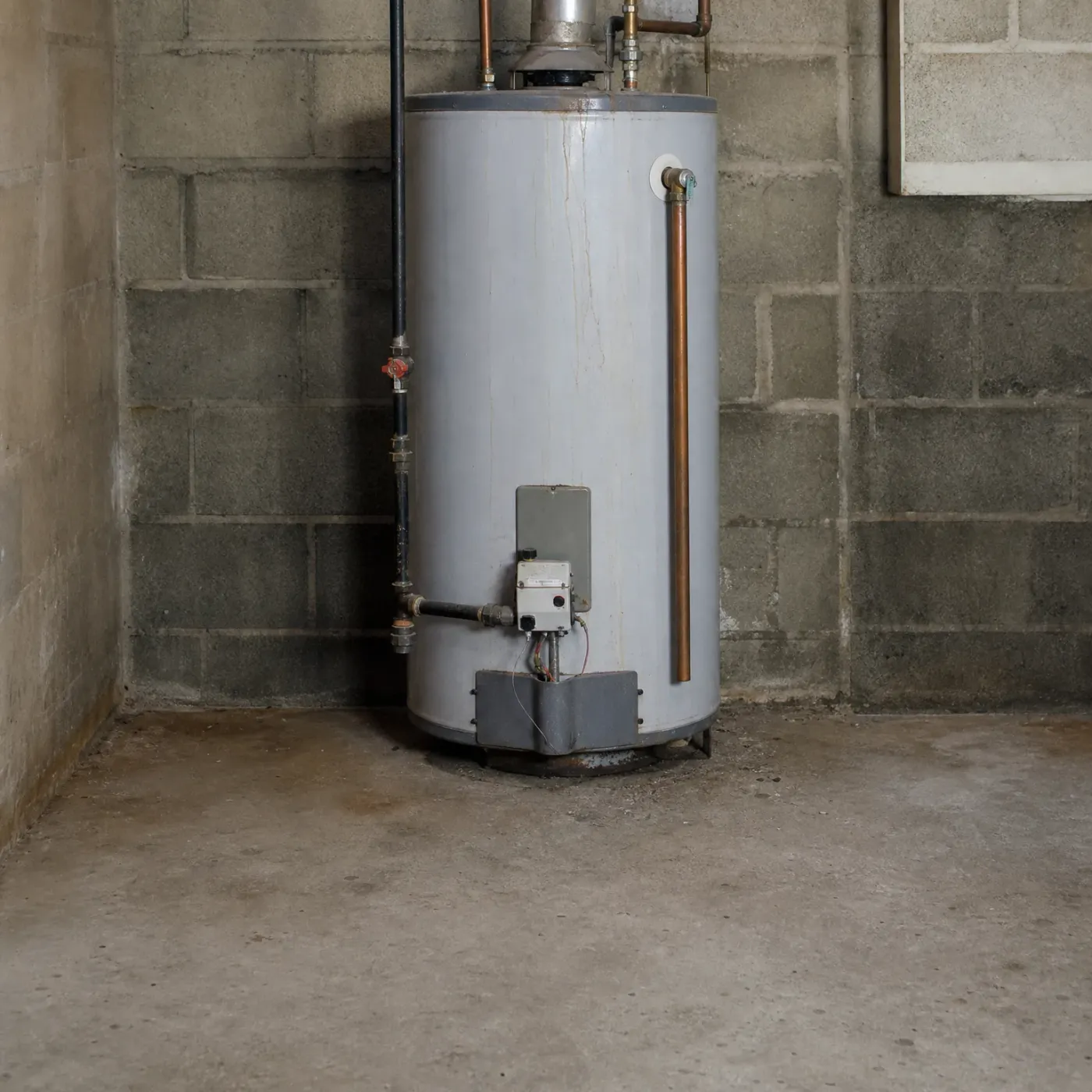

A gray cylindrical gas water heater with copper and black pipes stands in the corner of a basement with concrete block walls and a bare concrete floor.

Checked out now

A tech who works on these tanks every week knows sediment buildup when they hear it described over the phone. They'll flush the tank, check the burner and gas valve, and tell you what shape the tank's really in. If the popping's new, catching it early usually means a flush does the job instead of a new water heater.

A smiling man with dark curly hair in a navy t-shirt sits on a gray couch indoors, with a large-leafed plant and a window in the background.
A bearded man in a plaid flannel shirt stands in a kitchen looking out a window toward snow-covered shrubs, with a steaming mug on the windowsill and potted plants on a shelf behind him.
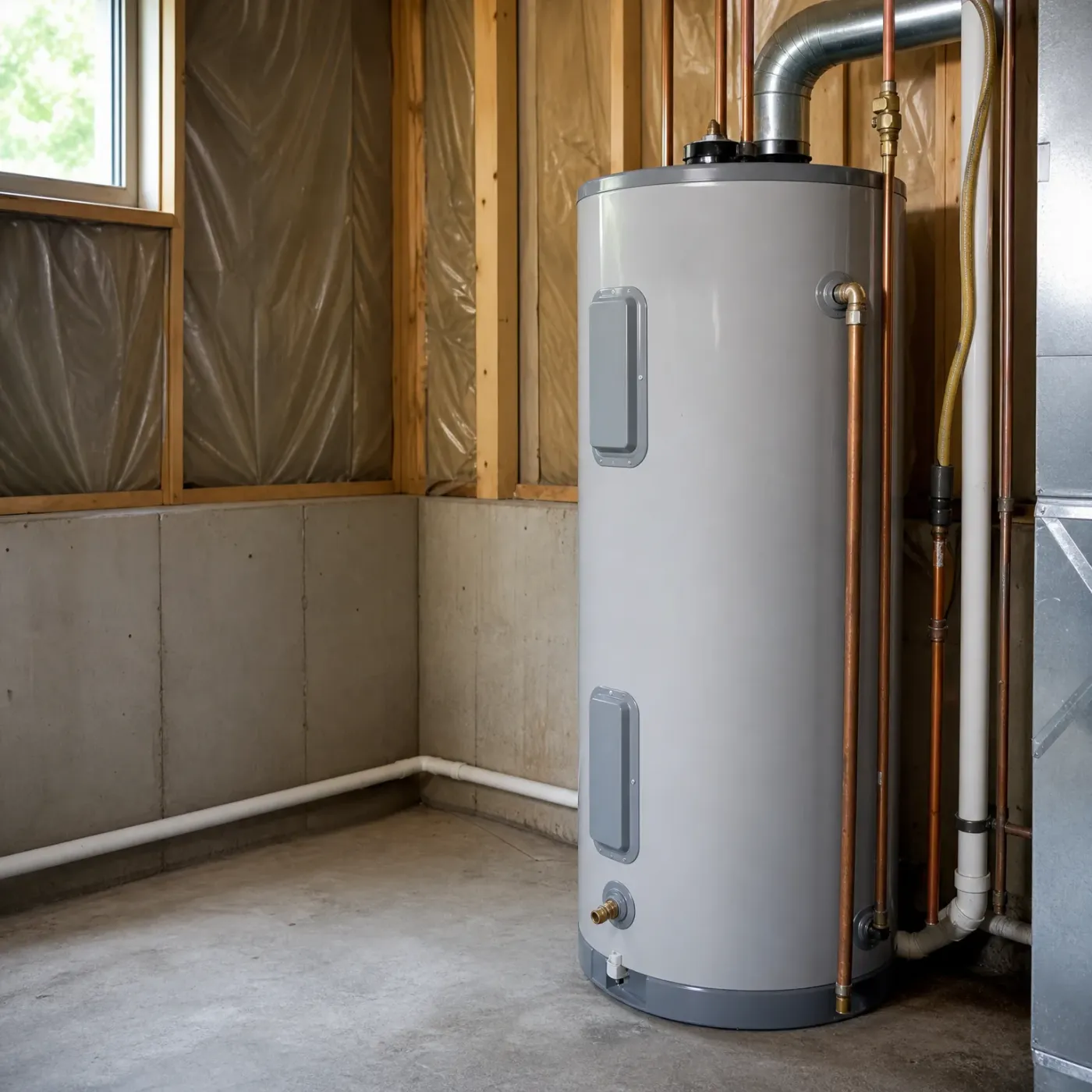
A gray cylindrical water heater stands in a basement corner with exposed wood framing, plastic vapor barrier, concrete walls and floor, copper and PVC piping, and a metal flue vent.

Hand off the water heater problem

Your request goes to one pro, not a list of companies.

After you send the request, you're done searching.

Hand off the search

Sending the form costs nothing.

Flush It Yourself or Call a Tech

Flush it yourself

  • Shutting off the gas or power and draining a few gallons from the tank's drain valve clears loose sediment sitting near the bottom.
  • A garden hose and a bucket are all the tools it takes, and most tanks have a drain valve made for this.
  • Hard water in much of Wyoming means scale builds back fairly quickly, so this is something to repeat, not a one-time fix.
  • A full flush on a tank that's never been drained can stir up enough sediment to clog the valve partway through.
  • This won't fix scale that's already hardened onto the bottom of the tank or wrapped around the lower heating element.
  • It costs nothing but your time, and it's worth doing before the popping gets loud enough to hear from another room.

Get it looked at

  • A tech who works on tanks all over Wyoming every summer knows how fast hard water fouls a gas water heater here.
  • They can tell from the sound and the tank's age whether it's loose sediment or scale that's bonded to the steel.
  • A licensed local contractor can flush a tank that's been neglected for years without cracking the glass lining underneath.
  • If the popping has gone on long enough to scorch the bottom of the tank, that's a repair a flush at home won't reach.
  • One contractor takes the call, so you're dealing with a single local tech instead of fielding calls from several companies.
  • Catching it now, while it's just noise, usually means a smaller job than waiting until the burner's been overworking for months.
  1. Burner fires beneath the tank and heats the steel bottom.

  2. Sediment layer sits between the flame and the water above.

  3. Water trapped under the scale turns to steam pockets.

  4. Steam bubbles push up through the sediment and collapse.

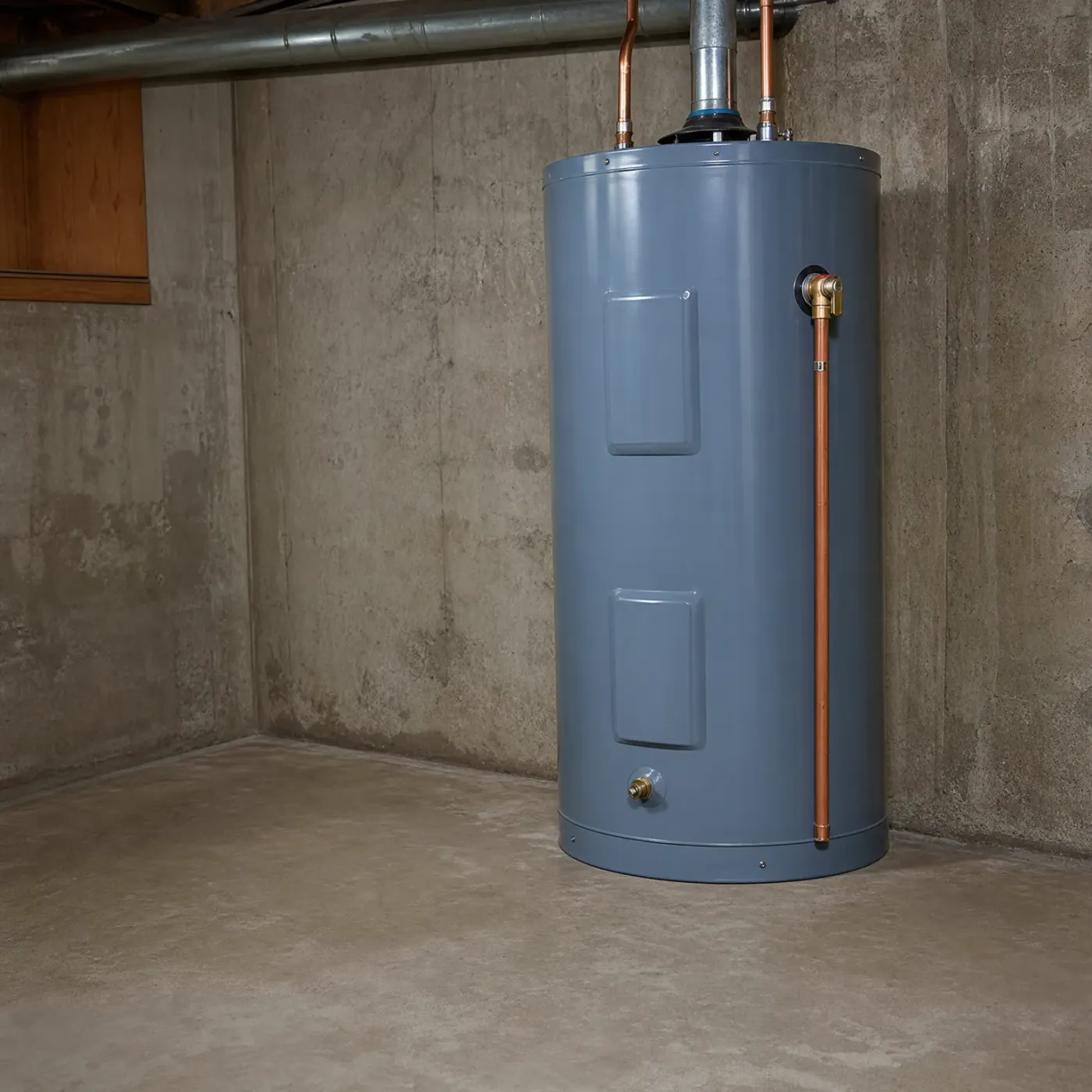
A gray cylindrical water heater standing on a concrete floor in a basement corner, with copper pipes and a metal duct running overhead along bare concrete walls.
A water heater with no sediment buildup runs quiet, the burner heating water directly with no scale layer to trap steam underneath.
A white cylindrical water heater with rust stains and two access panels stands in a basement corner between a painted concrete block wall and a bare concrete wall, with metal pipes running up and alongside it on a concrete floor.
Heavy rust and corrosion like this often come with years of sediment working at the tank from the inside, popping included.

What the Popping Tells You

  • The sound is sediment at the bottom of your tank, trapping water under scale until it pops as steam.
  • Gas heaters put that noise right over the burner, which is why Wyoming's mostly gas setups make it so noticeable.
  • The popping alone won't hurt the tank, but the scale underneath is making the burner work harder than it should.
  • Left alone across a few winters, that extra strain tends to shorten how long the tank lasts.
  • A drain and flush clears loose sediment yourself, but scale baked onto the steel needs a closer look.
  • Catching it now is a smaller job than waiting for the tank to fail outright.

The popping is sediment, plain and simple. It settles at the bottom of the tank, the burner heats it from underneath, and steam pockets form and collapse under the scale. That's the noise. Wyoming's water carries enough mineral content to build that layer up over time, and because most homes here run gas, the burner sits right under it, so the sound carries instead of getting absorbed somewhere else in the system.

None of that means the tank is failing today. But the scale is doing something the noise only hints at. It sits between the flame and the water, so the burner runs longer and hotter to do the same job it used to do easily. That strain doesn't reverse itself. Winter after winter, it wears at the steel underneath, and a tank that might have lasted well past a decade starts running short of it.

A flush handles the loose sediment, the part that hasn't bonded to the tank yet, and plenty of homeowners manage that part on their own. What a flush can't touch is scale that's already baked onto the steel. That part needs a technician who can tell how far it's gone and whether the tank is still a good candidate for cleaning out or whether it's past that point.

Catching it now, while it's still just noise, is a far smaller job than catching it after the tank's given out.

A smiling man in a gray long-sleeved shirt stands in a kitchen looking to the side, with open shelves of dishes, a white mug on the counter, a potted plant, and a view through a doorway into a living room.
A smiling bearded man in a green sweater sits at a white marble kitchen island with a mug, potted plant and bowl of fruit, in a bright white interior with open shelving and an arched doorway.
A smiling man with dark curly hair and a beard, wearing a dark green knit sweater, stands at a white marble kitchen counter with a dark blue mug, with open shelving, pendant lights and a houseplant behind him.
A smiling man in a green ribbed sweater stands behind a wooden table holding a ceramic mug of coffee in a kitchen with white subway tile, shelves of potted plants, and a bowl of fruit.

Water Heater Repair

Send one request and you're done looking

The pro who reaches out is licensed in Wyoming.

A black-framed smartphone standing upright against a plain white background, its screen filled with solid green.
Step 1 of 3: Equipment