






Why your water heater is leaking in Wyoming

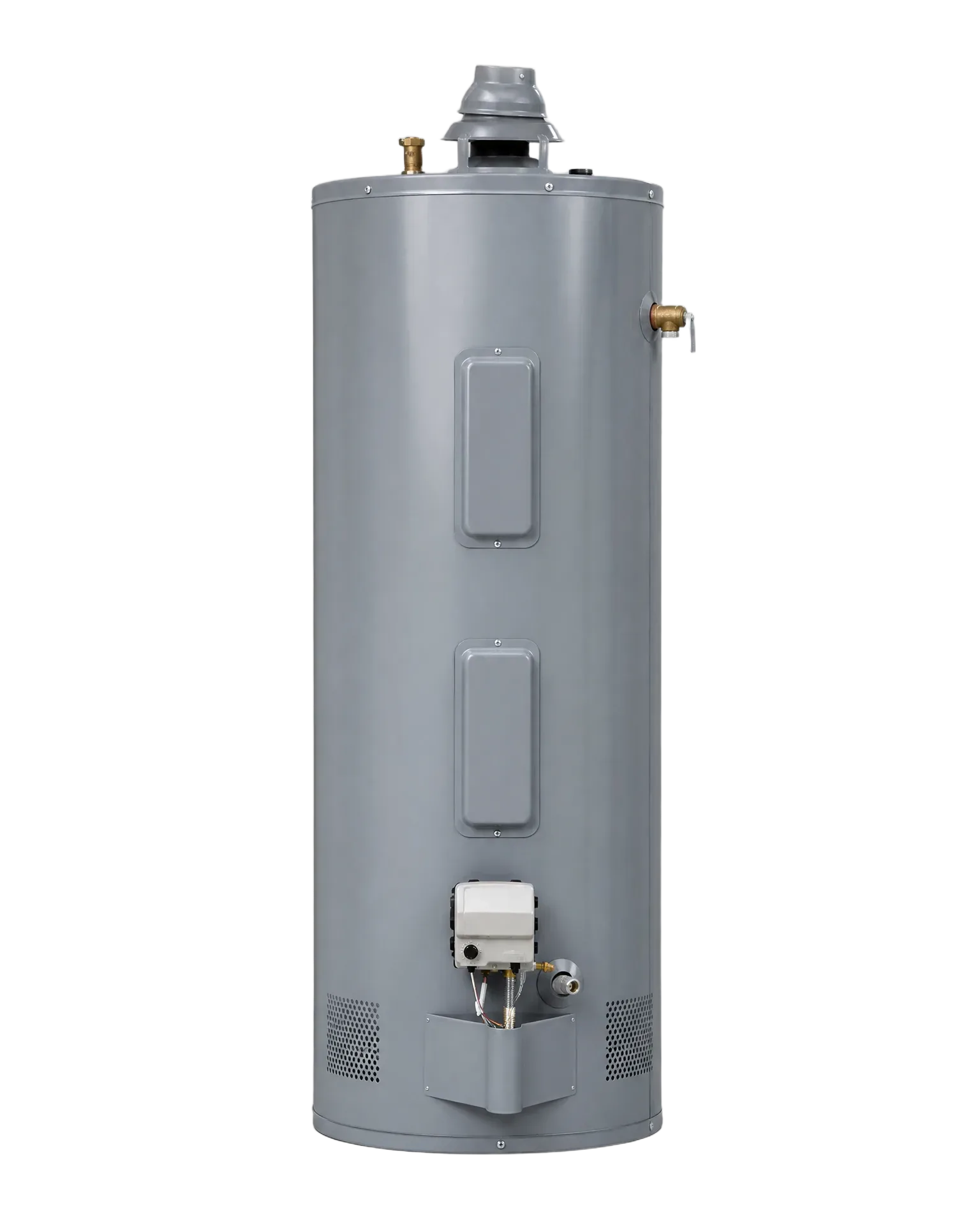
A gray cylindrical gas water heater with a top flue hood, brass fittings, two access panels, a control valve and burner cover, photographed against a plain gray background.
Get matched

A leaking water heater is almost always the tank itself giving out, or a fitting that has worked loose. Inside the tank, sediment settles at the bottom, and over years it wears a soft spot in the steel until water finds its way through. That's a crack you can't patch. If the leak is at the top, it's more likely the inlet or outlet fitting, the temperature and pressure relief valve, or a loose connection on the cold water line, and those can often be fixed without replacing the unit. Gas water heaters, which most homes here run on, can also leak from a failed drain valve or a cracked tank from age. Either way, water pooling at the base means something needs a look now, before it damages the floor around it or the unit fails outright.

59% of homes statewide heat with gas

Most houses in Wyoming run a gas water heater, the kind with a pilot and a tank bolted to a gas line. If yours is leaking, check underneath for rust or a wet spot around the base before you assume the worst.

ACS 2020-2024 5-year B25040

A man seen from behind raises his hand to wave at a woman standing in the open front doorway of a single-story house with gray shingle siding, white columns and a gabled porch entry.

What a leak actually puts at risk in your house

A tank that's leaking slowly can sit in a closet or basement for weeks before you notice, and by the time you see water on the floor, the subfloor or drywall nearby may already be soaked. If your water heater sits on a finished level, that's carpet, baseboards, maybe the ceiling below it. If it's in an unfinished basement, you've got more time, but the rust forming around the base is telling you the tank's been wet for a while already.

Wyoming's dry air keeps mold from spreading as fast as it would somewhere humid, but it doesn't stop water from warping wood or rusting out whatever the tank is sitting on. A cracked tank doesn't patch. Once you know that's what you're looking at, the next step is getting a contractor who works on water heaters in your area to come look at it and tell you straight whether it's a repair or a replacement, so you're not guessing at it alone.

A gray upholstered sofa with a textured cushion sits beside a dark round side table holding a vase of green foliage, with a table lamp and sheer-curtained window behind.
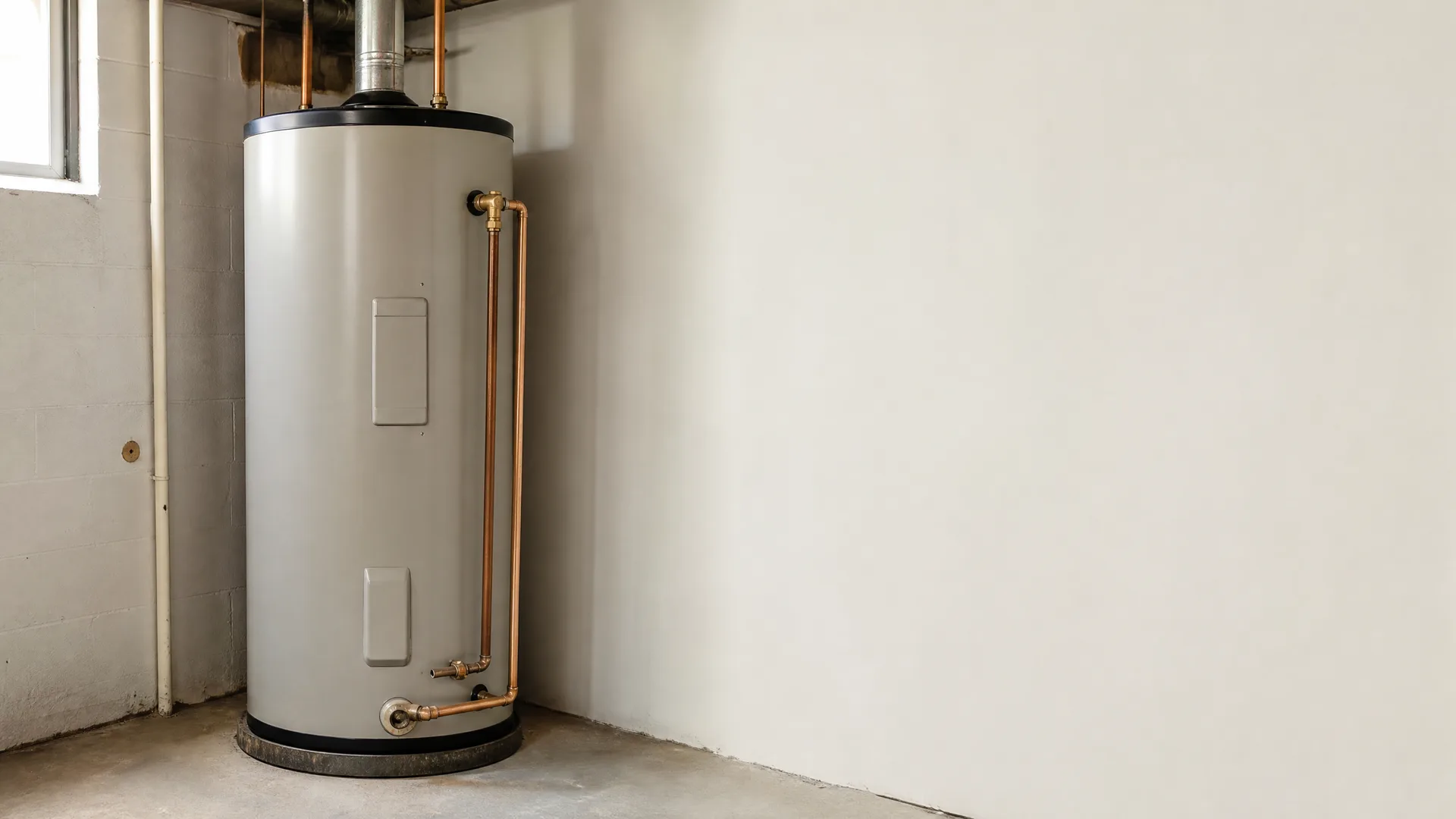
A tall gray cylindrical water heater with copper piping and a flue stands in the corner of an empty basement room with concrete block and painted walls.

A tank that's rusting through

Rust at the bottom seam or a reddish stain in the water is the tank failing from the inside. Sediment holds moisture against the steel, and once it eats through, no amount of tightening fittings stops it. The tank has to be replaced. Water heaters don't get patched once the steel itself has given way, so if the rust is coming from the tank body rather than a connection, plan on a new unit going in.

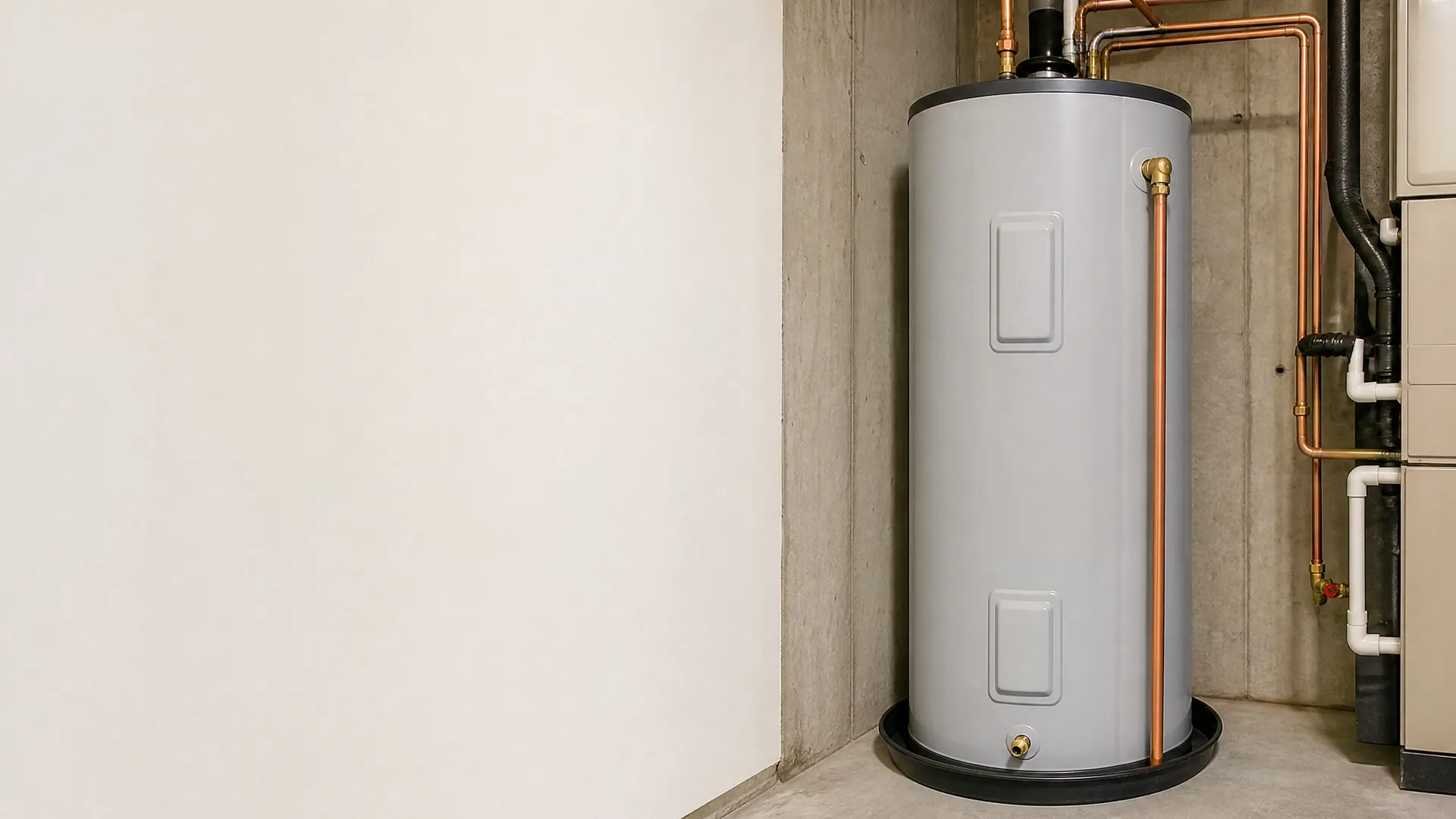
A gray cylindrical water heater stands in a drain pan against a concrete wall, with copper and white pipes running along the wall to the right and a plain light wall on the left.

A fitting that just loosened

Water around the top of the tank, near the cold inlet or hot outlet, often means a fitting worked loose or a valve is failing, not the tank itself. The same goes for the pressure relief valve on the side. These parts can be tightened or swapped without touching the tank. It's worth checking before assuming the worst, since this kind of leak is a far smaller job than replacing the whole unit.

Is that puddle actually coming from the tank?

Walk over and look at where the water sits. If it's pooling right under the tank, or running down the side from a fitting up top, check the pipe connections first, those can be tightened or replaced without touching the tank. If the water is coming from underneath the tank itself, or you see rust around the bottom seam, that's the steel failing and it won't stop on its own. Either way, a gas water heater sitting in water is a problem for the gas line and the floor it's sitting on, not just the tank. Dry it up, and don't wait on it.

A smiling man in a dark navy sweater sits on a light sofa in a living room, with a glass bowl of popcorn on a wooden coffee table and bookshelves behind him.
A smiling man in a dark green sweater sits on a tan leather sofa in a dimly lit living room, with a bowl of popcorn in the foreground and a kitchen area blurred behind him.
A smiling middle-aged man in a dark shirt sits on a gray sofa in a living room, with a bowl of popcorn on a side table and shelves, a window and kitchen area behind him.
A smiling bearded man in a dark gray t-shirt sits on a gray couch in a living room, with a large glass bowl of popcorn on a wooden table in the foreground.

A local pro for your water heater repair

Send the request and finding a pro stops being your problem.

It costs nothing to send, and you don't have to hire anyone.

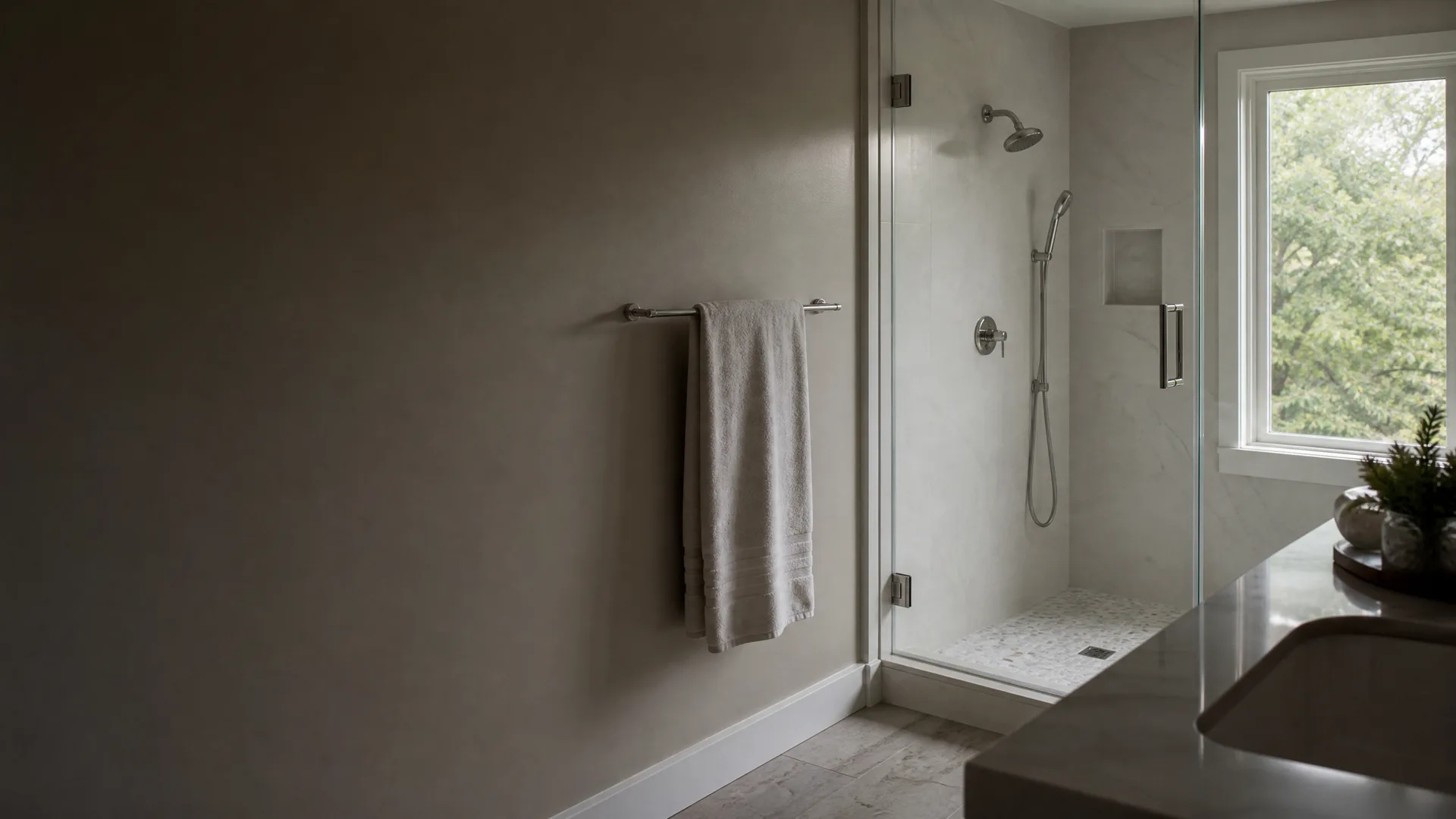
A bathroom with a gray towel hanging on a bar against a taupe wall, a glass-enclosed shower with marble-look tile, showerhead and handheld sprayer, a window showing green trees, and a stone countertop with a sink at right.

You get up before work and head for the shower first. The water never steams. You stand there a second with your hand under it, waiting for hot, and it just stays lukewarm, the bathroom mirror clear instead of fogged over like it should be. The towel's already on the rail where you left it last night. Outside it's going to be hot and dry again, the kind of Wyoming morning where you don't think twice about your water heater, except now you're thinking about it, standing half-dressed in a bathroom that should smell like steam and doesn't, wondering what's wrong down in that closet or basement where the tank sits.

Why is water dripping from the temperature and pressure valve?

You spot water dripping steadily from that little valve and pipe on the side of the tank, not pooling underneath from below. It looks different from a tank failure, and you want to know if this one is actually dangerous or just a part that needs attention.

It's releasing pressure that built up past what it's rated for

The temperature and pressure relief valve is built to open when the tank gets too hot or the pressure inside climbs too high, and it's doing its job by letting water out rather than letting the tank fail. Dripping usually means it's opening at a lower threshold than it should, which points to a failing valve, or it means the pressure in the tank is genuinely running high and needs a look. Either way, it isn't something to cap off or ignore. Thermal expansion in a closed system can push pressure up enough to trigger it, and a valve that won't reseat after opening will keep dripping until it's replaced.

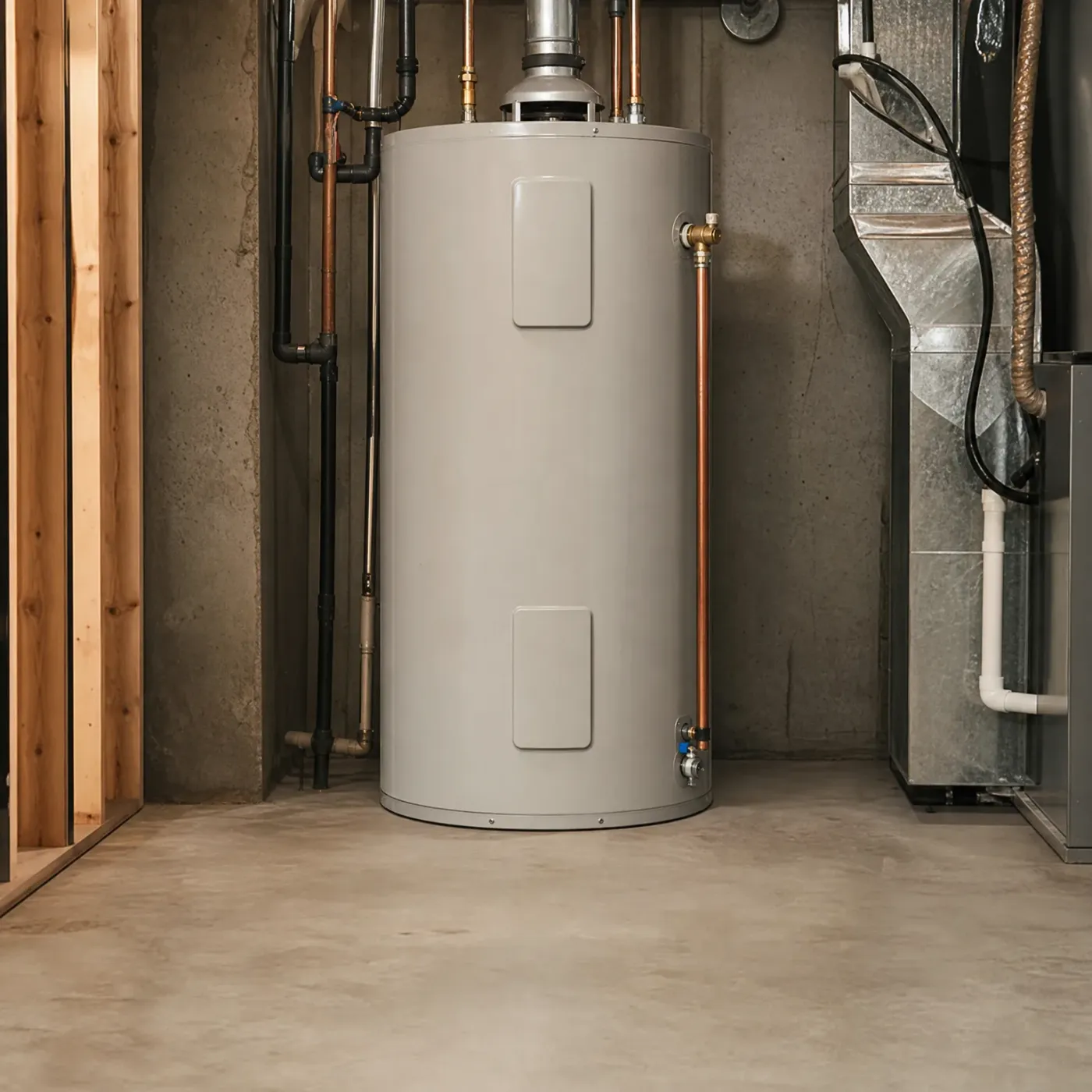
A gray cylindrical water heater with copper piping and access panels stands against a concrete basement wall beside ductwork and vertical pipes.

A tank that's doing its job

Copper lines run tight into the top, the pressure relief valve sits dry, and the floor underneath stays clean. The furnace next to it keeps its own ductwork separate, no shared moisture, no rust creeping onto either unit. This is what a dry basement around a water heater looks like.
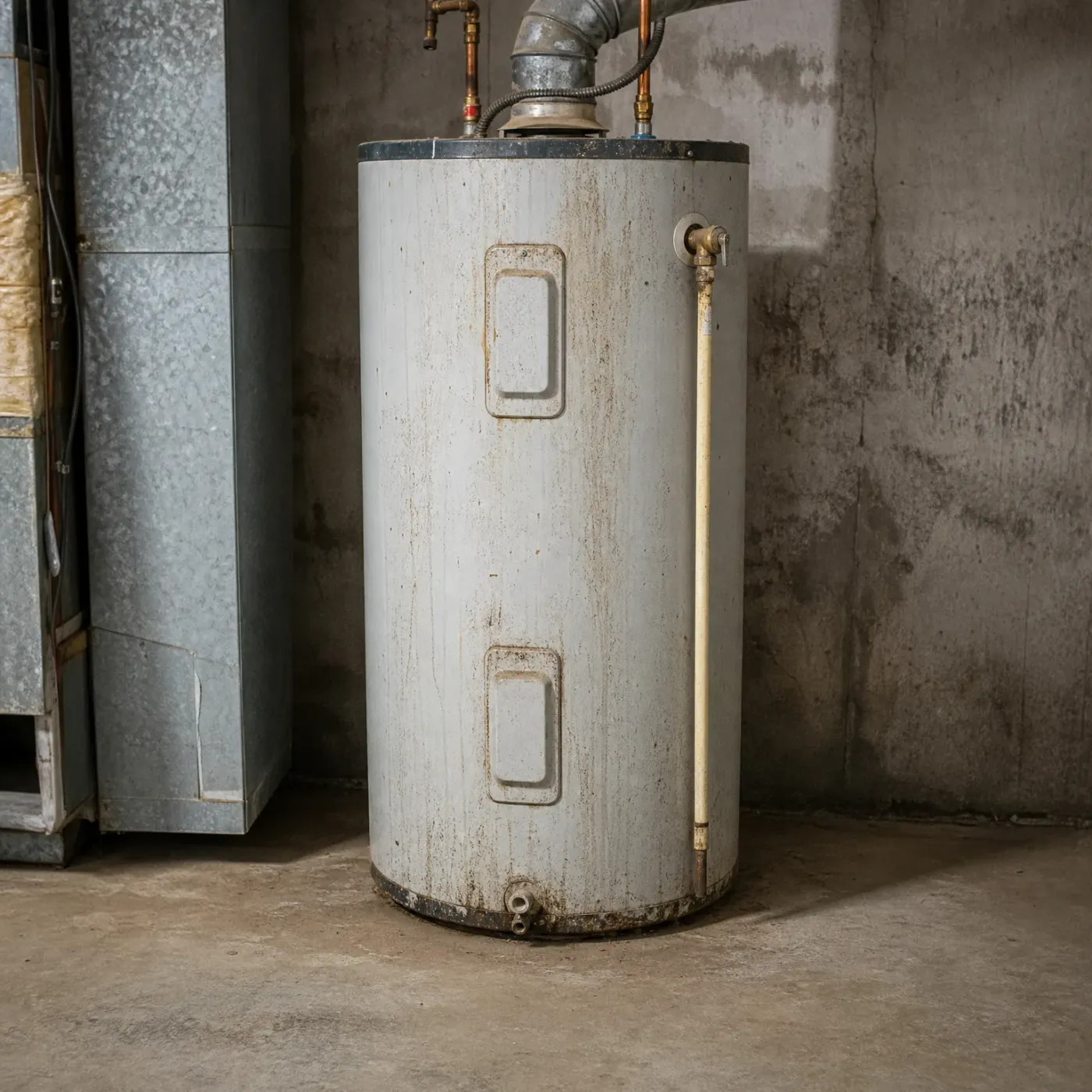

An old rust-streaked cylindrical water heater with two access panels, copper pipes and a flue at the top, and a discharge pipe along its side, standing on a concrete floor beside galvanized ductwork against a bare concrete wall.

A tank that's past it

Rust has worked over the whole shell and reached the access panels on the front. The fittings at the top, copper meeting galvanized, are a spot leaks start even before the tank itself gives out. Against bare block with no barrier, any water that gets out has nowhere to go but the floor.

A woman with dark hair in a bun reclines on a sofa with her eyes closed, wrapped in a cream fleece blanket, a closed blue hardcover book resting in front of her, with a lit lamp and a vase of dried flowers in the background.
A smiling bearded man in a navy sweater sits at a candlelit dinner table with a glass of red wine, a bowl of salad, and plates of food in the foreground.

Where your leak actually stands

  • A tank that's rusting through needs replacement, but a loose fitting or a worn valve is often a straight repair.
  • Water pooled right under the tank points to the tank itself, while water running down the side points to a fitting up top.
  • A valve dripping steadily is doing its job and releasing pressure, but it still needs a contractor to find out why.
  • Left alone, even a slow leak reaches the subfloor or the drywall nearby before you see it on the floor.
  • Checking underneath the tank for rust or a wet spot tells you more in thirty seconds than guessing will.
  • Once you send the details in, finding the right contractor for your situation is off your plate.

A leak always comes down to one of two places: the tank or a fitting. The tank rusting through means replacement, there's no patching steel that's worn thin from the inside. A loose fitting, a worn valve, a connection that's worked itself free over time, that's usually a repair, and often a fast one. Where the water shows up tells you which one you're dealing with. Pooled right underneath, that's the tank. Running down the side from up top, that's a fitting, and worth checking before you assume the tank is done for. The T&P valve dripping is its own case. That valve is supposed to release pressure, so water from it doesn't mean the tank is failing, but steady dripping still means something upstream is off, and that's worth a contractor's eyes regardless.

None of this gets better by waiting. A slow leak you haven't noticed yet is still finding its way into the subfloor or the drywall nearby, and the longer it sits, the more it touches. Thirty seconds looking underneath the tank for rust or a wet spot tells you more than any amount of guessing from across the room.

Once you've got a sense of what's going on, send in the details. From there, matching you with a contractor who knows your situation isn't something you have to manage anymore. That part's off your plate.

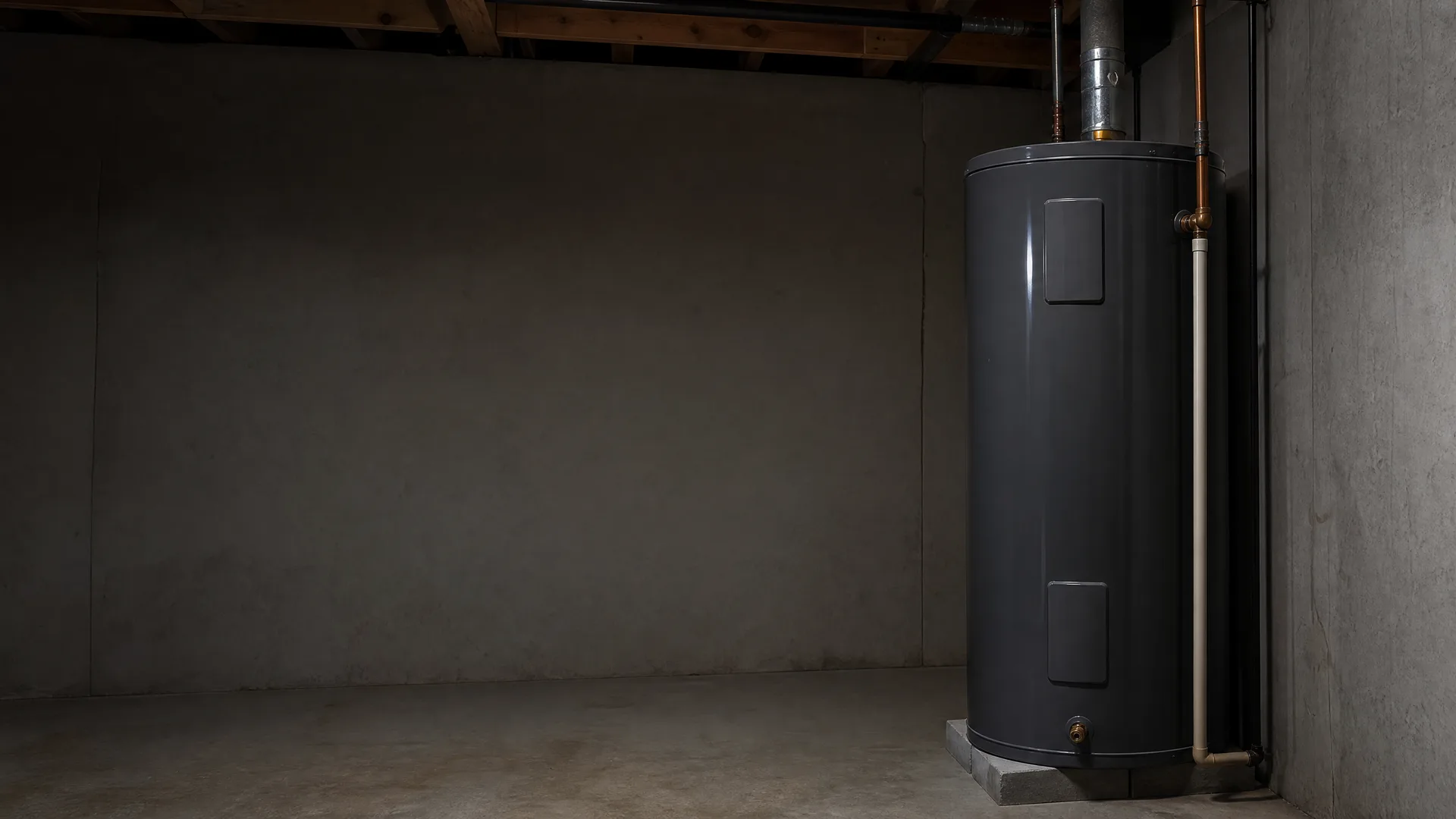
A dark gray cylindrical water heater with copper and metal pipes stands on a concrete pad in the corner of a dim basement with bare concrete walls and exposed floor joists overhead.

Get the right pro for your water heater

After this form, you can stop searching for a water heater pro.

Step 1 of 3: Equipment