Wyoming Home Water Heaters

Tank or tankless water heater for a Wyoming home

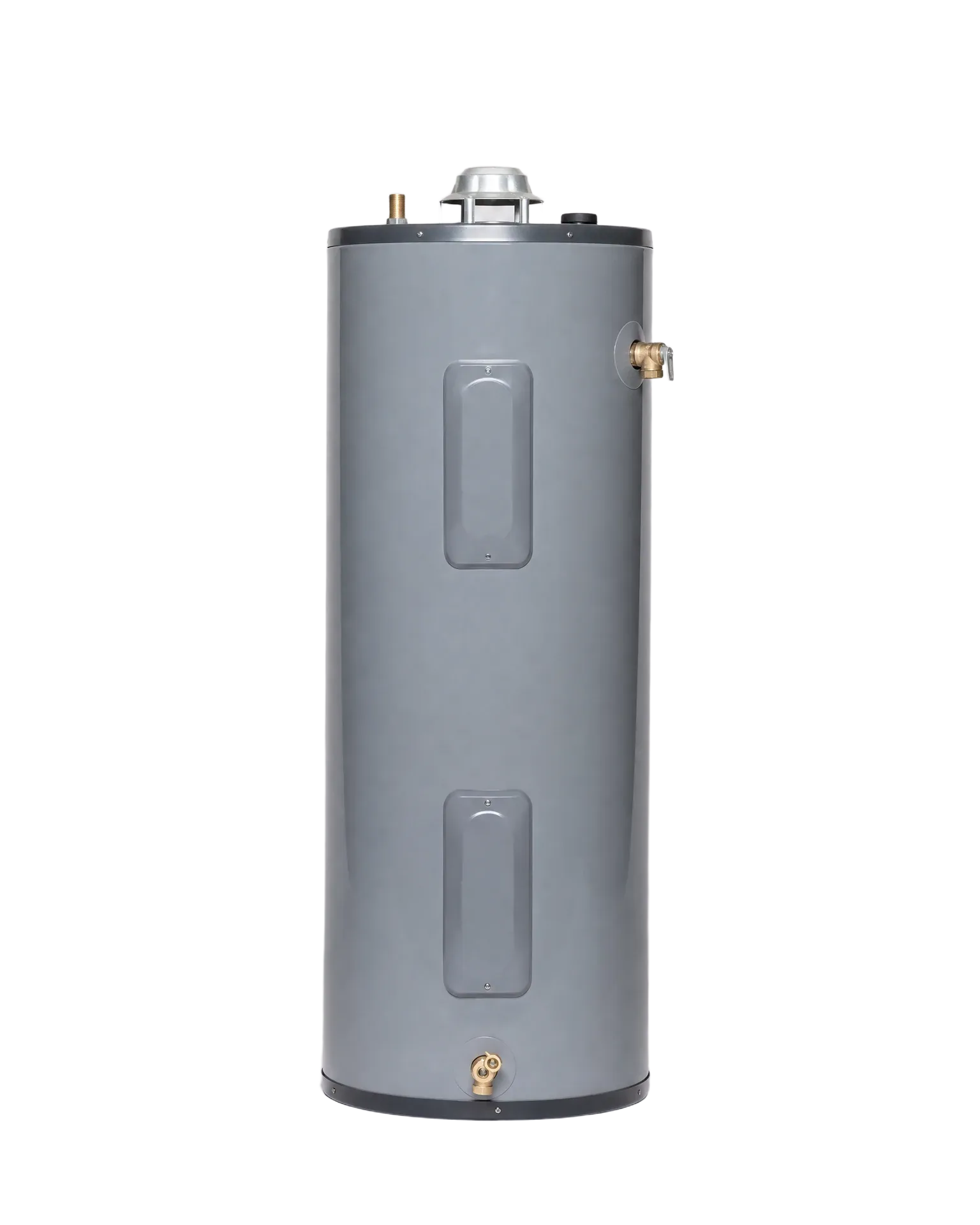
A gray cylindrical water heater with two access panels, a brass side valve, a bottom drain valve, and a metal vent cap on top, photographed against a plain light background.
Get my match

Should I get a tank or tankless water heater in Wyoming?

Replacing a water heater means deciding between two different setups, and that choice gets made for years, not months. In Wyoming most homes already run on gas, which opens up tankless as a real option rather than just an upgrade sold alongside a new tank. You want to know which one actually fits a house here, not just which one sounds newer or more efficient on paper.

A gas tank water heater is the simpler, more reliable choice for most Wyoming homes

A tank keeps a reserve of hot water ready, so it can meet a full household's demand at once without the household changing how it uses hot water. A tankless unit heats water on demand, and gas-fired tankless units can keep up with that, but they need a bigger gas line and proper venting to do it, which adds to the install. Since most homes in Wyoming already heat with gas, either option is on the table here. If your home's gas line and venting were sized for a tank, a tankless install means upgrading both. A tank is usually the straightforward swap; tankless makes more sense when you're already planning to rework those lines.

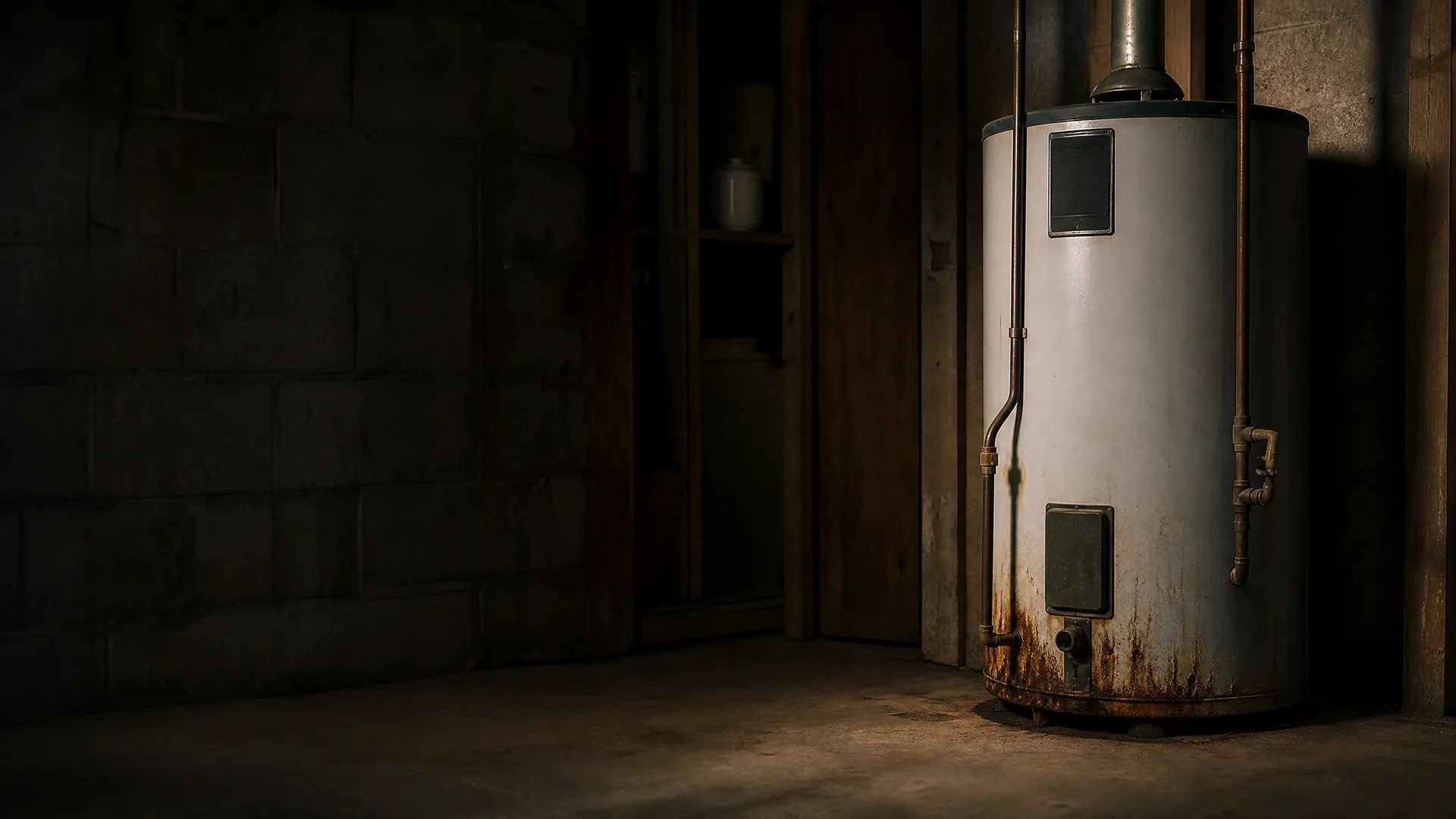
A rusting cylindrical water heater with attached pipes and flue stands in a dim basement corner beside a concrete block wall and a wooden door.

You go down to the utility room after dinner to grab something off the shelf, and the light catches the base of the tank. Rust streaks run down the side onto the concrete, dried in some spots, still dark and wet in others. It's late evening, the house is quiet, the water heater just finished a cycle and you can hear it ticking as it cools. You crouch down to look closer. The rust is coming from a seam near the bottom, not the fittings on top. Outside, the dry summer air hasn't let anything stay damp for long except this. You stand back up and figure you'll deal with it this weekend.
Tank vs Tankless: Which Fits Your Home

Tank

  • A tank holds forty to fifty gallons ready to go, so two showers back to back don't run you out of hot water as fast as you'd think.
  • Installation is usually a straight swap if the new one matches your old gas line and vent, since the setup in the utility room doesn't change much.
  • Gas is common here, and the tank's main job of keeping that water hot around the clock is cheap to run with Wyoming's low power costs backing the rest of the house.
  • A failing tank gives you some warning. Rust at the base, a popping sound, water that takes longer to heat all point to a unit on its way out.
  • The tank itself is the simpler machine, fewer parts that can fail, which matters if you want a system a local plumber can service without a special trip for parts.
  • It takes up real floor space in the utility room or closet, which matters if that room is small or doing double duty for storage.

Tankless

  • It heats water only when a tap is open, so there's no tank sitting there losing heat all day between uses.
  • Hot water doesn't run out partway through a long shower or a sink full of dishes, since it's made on demand instead of drawn from a fixed supply.
  • Venting is different from a tank unit, so putting one in usually means new venting work, not just connecting to what's already there.
  • It's a smaller unit mounted on the wall, which frees up floor space if your utility room is tight.
  • Gas tankless units need a gas line sized for the burner's demand, and an older line in the house may need to be checked against that before install.
  • It tends to last longer than a tank, which matters more if you plan to be in the house for the long run rather than a few years.
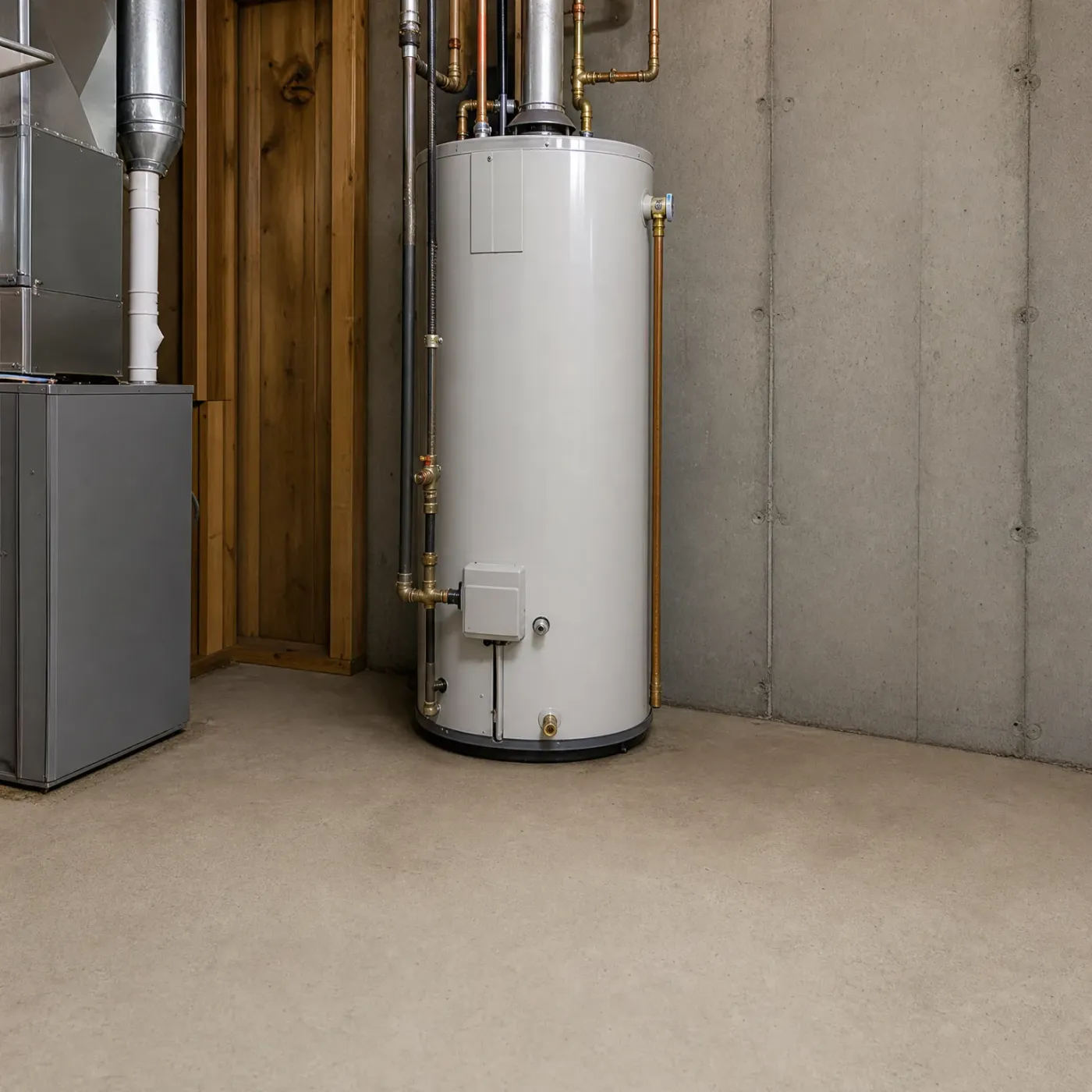
A white cylindrical gas water heater with copper and steel pipes stands against a concrete basement wall beside a gray furnace and wood-paneled wall.

A tank running clean

This is what a tank install should look like. The gas line and vent tie in overhead, the connections are tight, and there's no rust on the floor underneath it. A setup like this, next to a furnace that's venting properly, can run for years without giving you trouble.

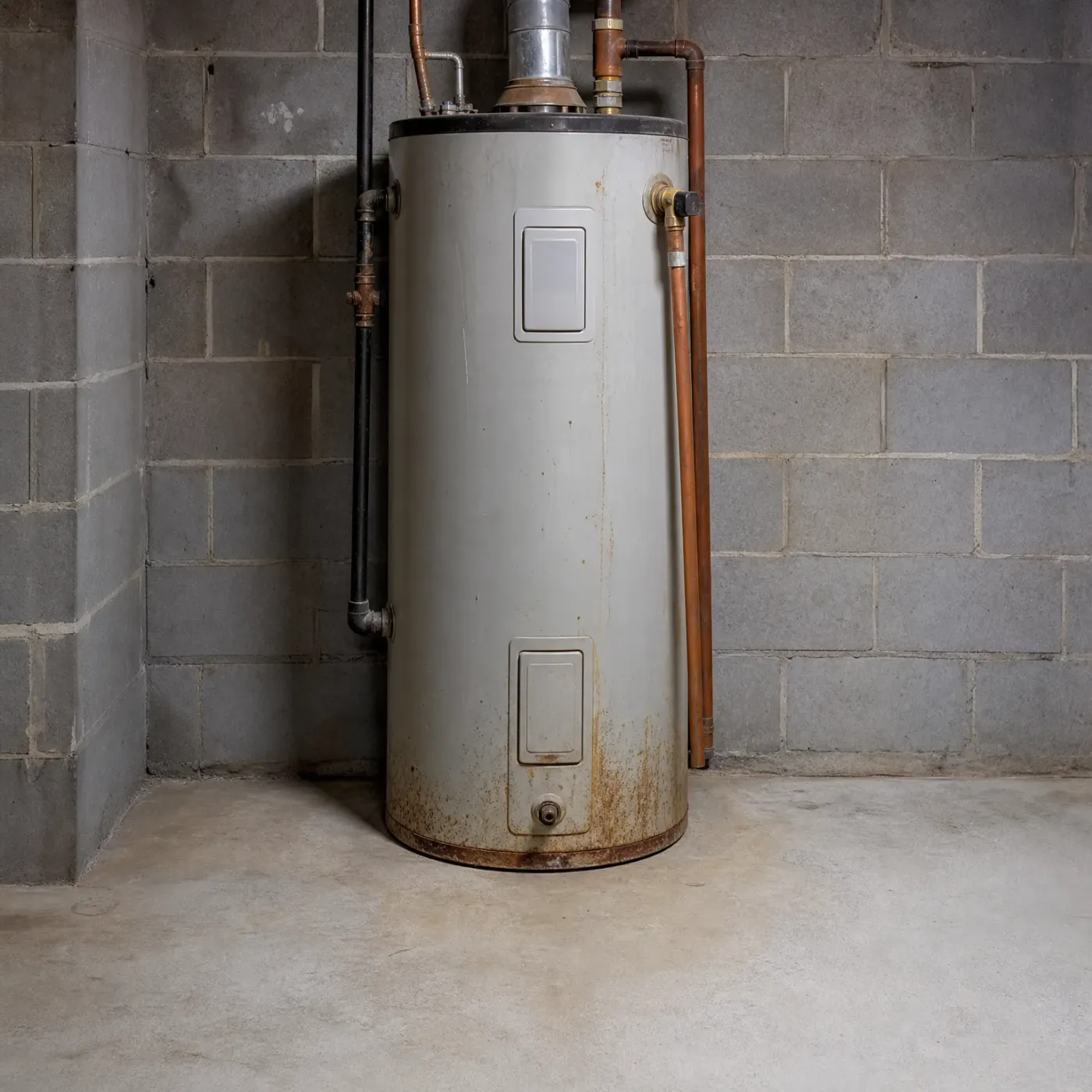
A rust-streaked cylindrical water heater with copper and black metal pipes stands in a concrete-block basement corner on a bare concrete floor.

A tank past its years

This is what waiting too long looks like. Rust has worked down the seams and pooled at the base, and once it shows up like that, the tank is failing, not aging. An electric unit in this shape is also the case where tankless gas is worth pricing out, since Wyoming gas makes the swap practical.

An older white gas water heater with rust staining and an exposed vertical pipe stands against a concrete block basement wall, with a metal flue above and black vertical pipes to the right.
Before you get your water heater installation
A light gray cylindrical water heater with two access panels stands on a concrete floor against a concrete wall, with copper and black pipes beside it and an unfinished wood stud wall to the right.
After you get your water heater installation

A water heater pro near you

One installer gets your project, so there's no bidding war over it.

You only hire the pro if you want to.

What gas tankless actually needs

A tankless unit heats water on demand with a burner sized much larger than what's on a tank, and that means a bigger gas line in a lot of cases, plus venting rated for its higher output. If your gas line and vent were sized for a tank, a tankless swap isn't a straight drop-in. A contractor checking this out will look at the gas meter, the line running to the unit, and the vent material before anything gets installed. That inspection is what decides whether tankless is a clean install or one that needs line work first, and it's worth knowing before you pick.

Why altitude and cold water play in

Wyoming's groundwater runs cold, and a tankless heater has to raise that incoming temperature to your set point in the time it takes to pass through the unit. The colder the water coming in, the harder that burner works and the lower the flow rate you get at full temperature. A tank doesn't have this problem because it's heating water ahead of time and holding it ready. Altitude affects gas combustion too, which is why a unit rated for sea level gas pressure may need adjustment here. Either way, this is a detail a local contractor accounts for at the time of install.

A woman with long wavy brown hair in a grey ribbed sweater sits on a couch indoors, looking toward a window, with a potted palm-like plant and fireplace behind her.
A woman with long brown hair wearing a green V-neck top and beige cardigan sits on a light sofa, looking off to the side, with a dining table, lamp and framed picture in the background.
A woman with long dark hair in a cream knit sweater sits on a beige sofa indoors, looking toward a bright window with a houseplant and framed picture in the background.
A woman with long dark hair in a green knit sweater sits on a couch indoors, smiling and looking toward a window with a blurred room behind her.

Tank: a straight swap

If your gas line and vent already fit, a tank replacement goes in without upgrades to the line. Good if the utility room setup isn't changing.

Reach a local pro

Tankless: bigger gas line, often rated venting

A larger burner usually means an upsized gas line and new venting. Worth it if you want endless hot water and the line can support it.

Reach a local pro

What's telling you it's time to replace it

You already know the signs, that's probably why you're here. Rust at the base of the tank, water pooling on the concrete, a tank that's lukewarm by the second shower. Maybe it's a popping or rumbling sound when the burner kicks on, water that's been heated and reheated over sediment at the bottom. None of that gets better on its own. A tank that's rusting through can fail outright, and a leak in the utility room near a furnace isn't something to let sit. If you're at the point of replacing rather than repairing, that's usually the right call once the tank itself is the problem.

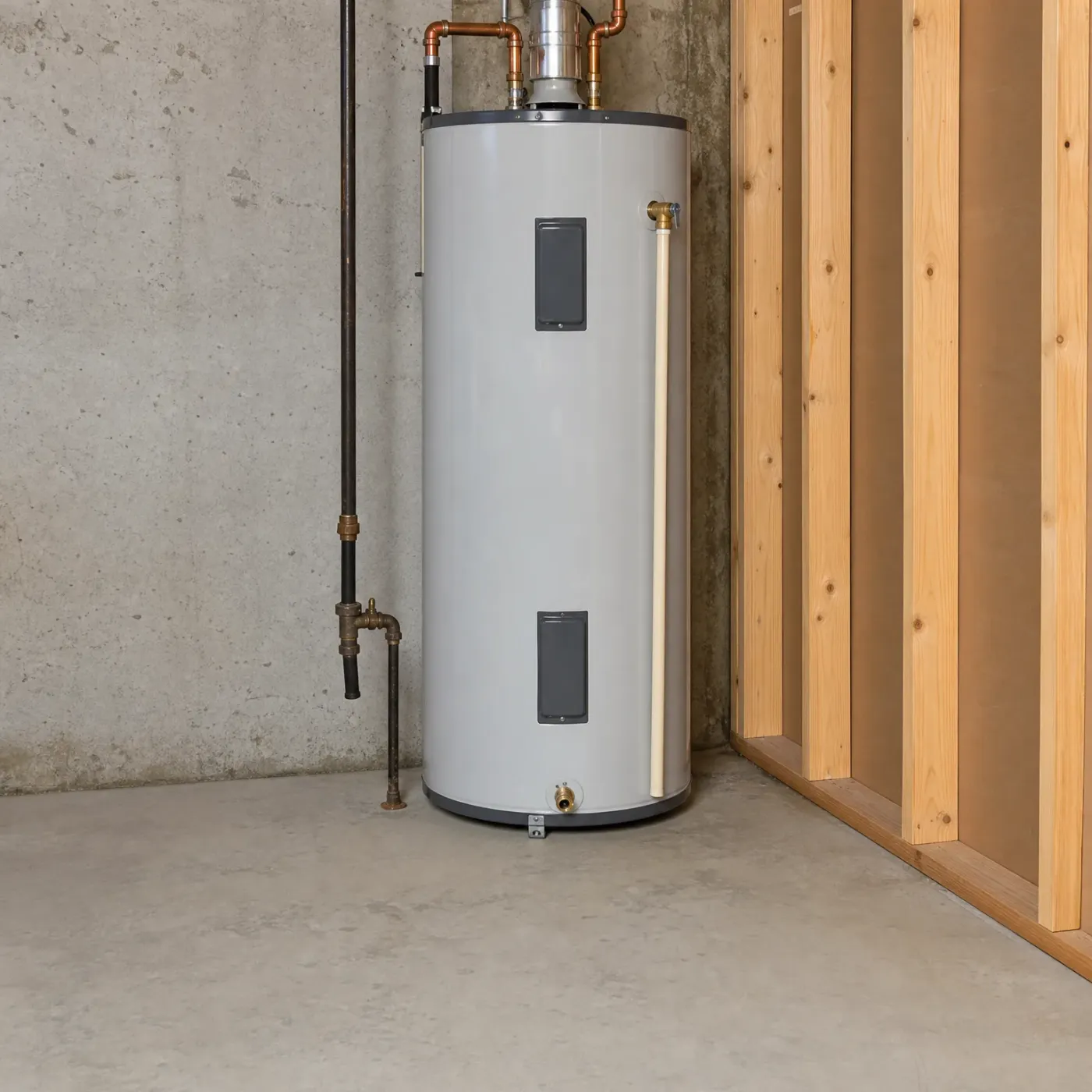
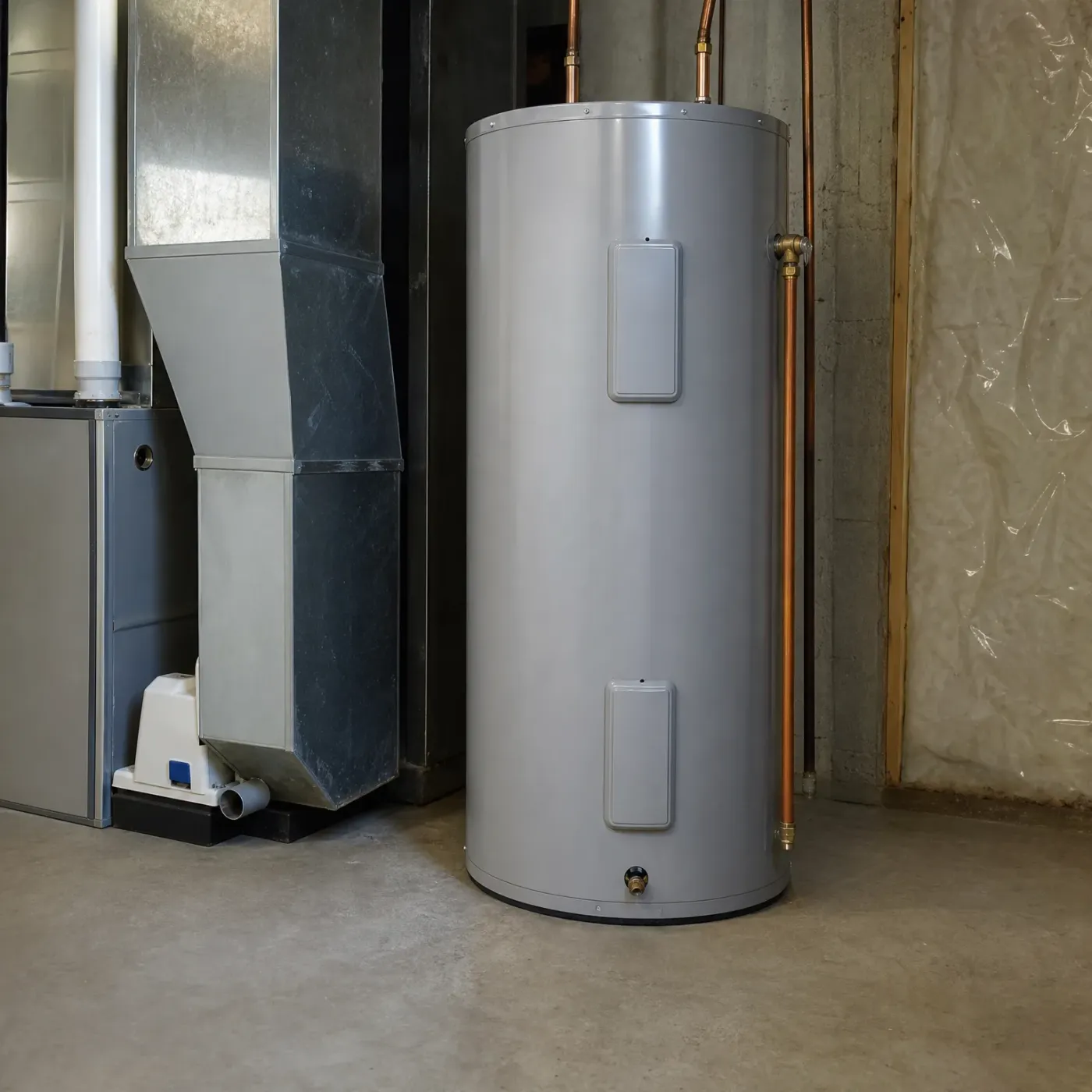
A gray cylindrical electric water heater with two access panels stands on a concrete floor in a basement, with copper pipes above and behind it, sheet-metal ductwork and a furnace to the left, and a plastic-covered insulated wall to the right.

A setup that's doing its job

Copper lines run tight to the fittings, no green corrosion, no drips on the concrete. Sitting next to the furnace like this, it's just another piece of equipment doing its job quietly. Nothing here needs your attention.

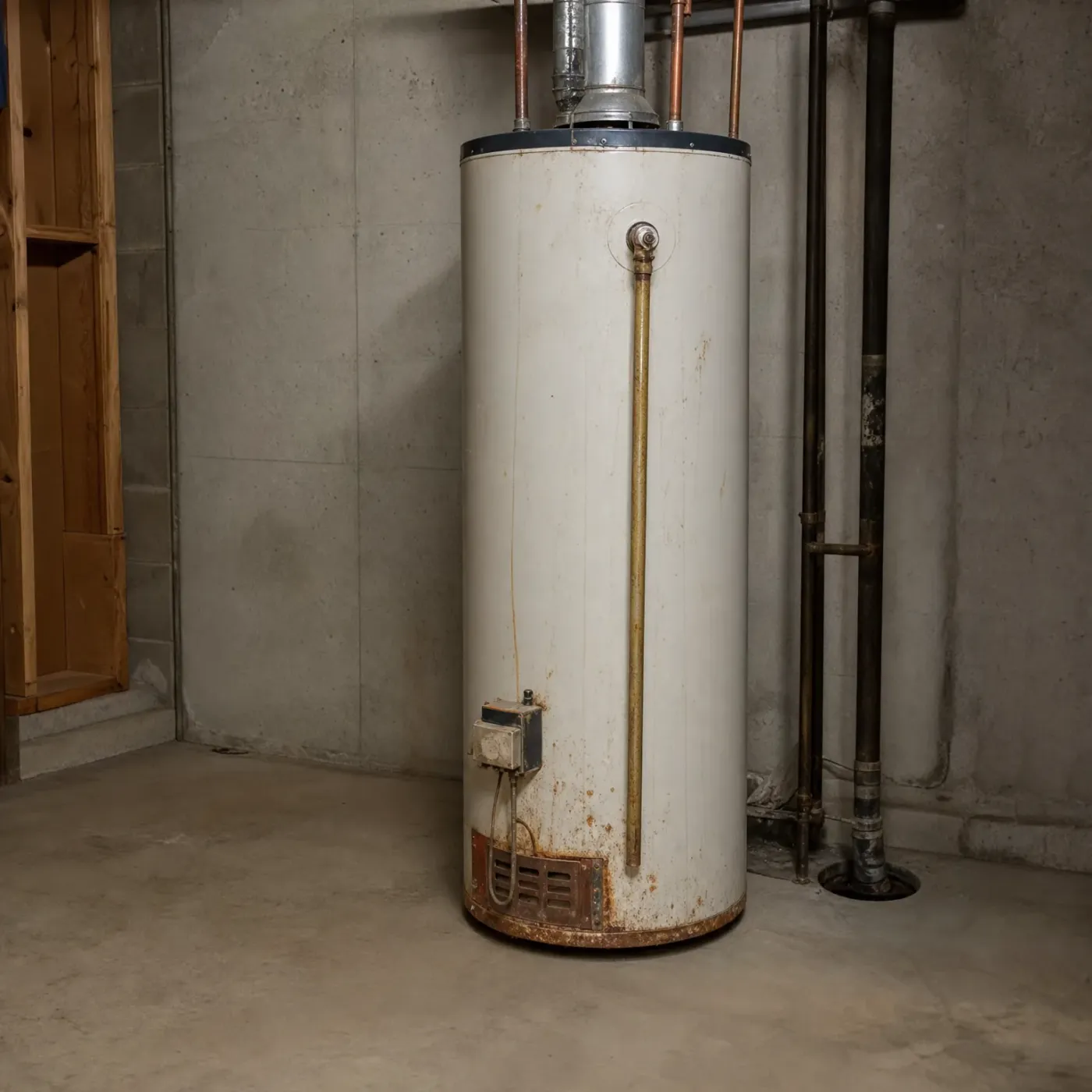
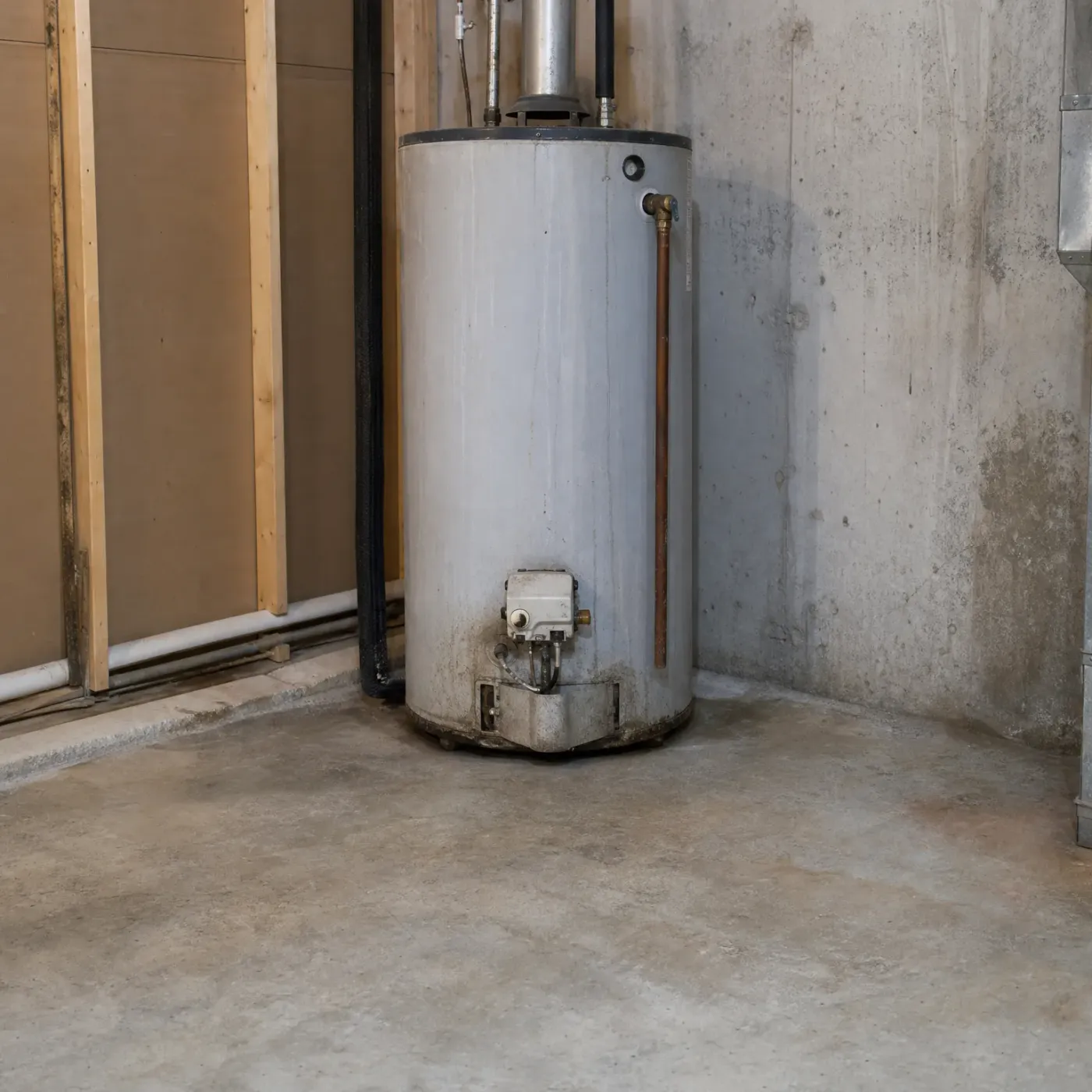
An older gas water heater with a copper pipe and flue stands on a concrete floor in a basement corner between a bare concrete wall and an unfinished wood-framed wall.

A tank that's telling you something

Rust has worked its way down the side and settled into the concrete at the base. That black flue pipe and the grime around the burner point to a unit that's been at this a long time. This is what prompts a call, not a maintenance visit.

59% of homes statewide heat with gas

With gas already run to most houses in the state, swapping a tank for another tank is usually simple, and going tankless is realistic too since the gas line is often there to size up rather than install from scratch.

ACS 2020-2024 5-year B25040

A gray-haired woman in a cream knit sweater stands in a dimly lit kitchen at night, looking to her right, with a round loaf of bread in the foreground and a dark window and potted plant behind her.
A woman with her hair in a bun holds a sleeping young child against her chest, both wrapped in a textured beige knit blanket on a sofa in a dimly lit room with a lamp, framed picture, and bookshelf behind them.
A smiling man in a denim shirt and white t-shirt stands in an open dark doorway of a stucco house, facing a woman with long brown hair and a green jacket seen from behind in the foreground.

Either way, the gas line decides more than the price tag does

A tank gets you back to normal fast if yours is already rusted through, and a straight swap is usually enough. Tankless makes sense when the gas line and vent can handle the bigger burner, or when you're willing to upsize them to get it. Both are good choices in Wyoming. Neither one is the wrong answer, it depends on what's already running to your utility room and what you want out of the next ten or fifteen years.

What matters now is getting someone in your utility room who can look at your gas line, your vent, and your old unit, and tell you straight which setup fits without guesswork. A local contractor who works on these year-round has seen what usually fails first in a tank and what a vent upgrade actually involves for tankless, in houses built like yours. You'll get matched with one contractor, not a handful, so you're dealing with a single person who already knows what questions to ask before they walk in the door.

Interior corner of a room with a window and sheer curtain at left, a gray upholstered sofa with a cushion at right, and a round wooden table holding stacked books and a round vase with an olive branch.
A dark gray cylindrical water heater with copper pipes at its top stands against a concrete basement wall, with wooden shelving and framing in the foreground at both edges.

Get the right pro for your water heater

Only one pro gets your request, so you hear from one company.

Step 1 of 3: Equipment