


Profile view of a bearded man wearing a black baseball cap and a dark gray T-shirt against a plain light background.

How often to flush a water heater in Wyoming

Step 1 of 3: Equipment

How often should I flush my water heater in Wyoming?

Your water heater sits there running most of the year, and you want to know if it needs attention before something goes wrong. Wyoming water tends to carry a fair amount of mineral content, and that mineral settles. You've heard flushing it out is something you're supposed to do, you just don't know how often, or whether skipping a year or two actually costs you anything down the road.

Flush your water heater once a year

Once a year is the standard for most homes in Wyoming. Sediment from your water supply settles at the bottom of the tank, and over months it builds into a layer that sits between the burner or heating element and the water above it. That layer makes the unit work harder to heat the same amount of water, and in a gas system it can scorch against the bottom of the tank and shorten its life. If your water runs harder than most, flushing twice a year keeps that buildup from getting ahead of you. Skip it for several years and the sediment can harden into a layer that a simple flush won't fully clear.

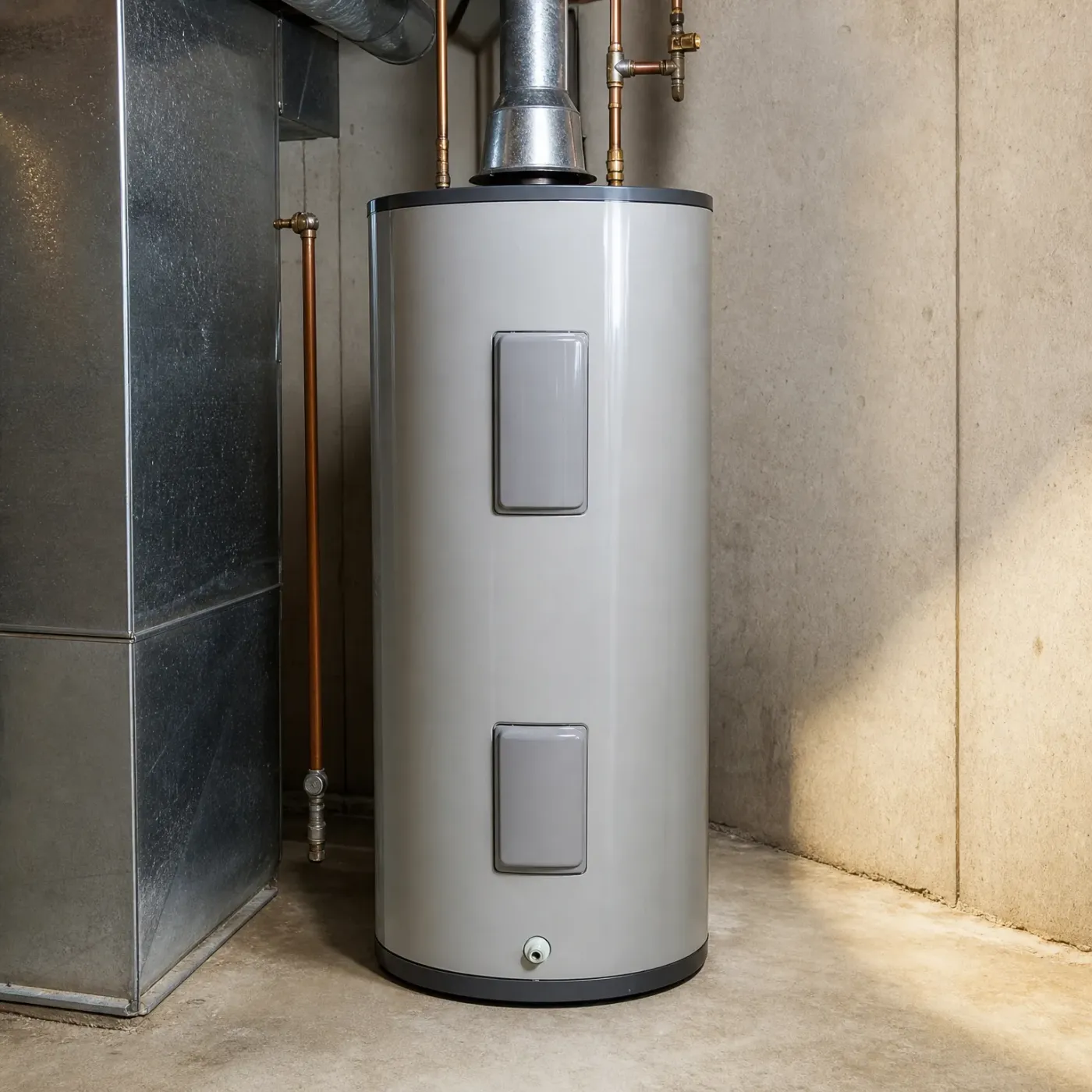
A gray cylindrical electric water heater with two access panels stands in a corner of a room with a concrete floor, connected to overhead pipes and a white drain pipe, beside a plain light-colored wall.

Where the sediment settles

A gas water heater has a burner underneath the tank, and whatever settles to the bottom sits right over that flame. A thin layer insulates the water from the heat, so the burner has to run longer to get the same result. Over time that layer hardens, and the tank starts making a ticking or rumbling sound as water works its way through the buildup. That sound is usually the first sign something is collecting down there.

A tall cylindrical water heater with copper and metal pipes at its top stands against a plain beige interior wall on a concrete floor, beside ductwork and a raised concrete step.

What a flush actually clears

Flushing means draining the tank fully through the valve at the bottom and letting fresh water carry the loose sediment out with it. It does not dissolve what has already hardened onto the tank floor. That is why catching it early matters more than catching it late. A tank flushed on a regular schedule stays close to empty at the bottom. One that has gone years without it may only get partway there, no matter how long you run the valve.

A woman in a cream cardigan and jeans stands with one hand raised facing an open front door of a gray horizontal-siding house, with a black lantern wall light, a potted shrub with yellow flowers, and a stone-faced porch column.

What a neglected tank costs you here

Power is cheap in Wyoming, so most people never look at the electric bill for a clue. Gas is where you'd notice, if you noticed at all. A tank that's never been flushed asks the burner to work harder for the same hot shower, month after month, and that shows up on the gas bill before it shows up anywhere else. Some homes never catch it. The water just gets a little slower to heat, the tank gets a little louder, and nobody connects it back to sediment sitting on the bottom.

The other cost is the tank itself. Hard water here means that layer builds faster than it would somewhere with softer water, and a tank running hotter than it needs to wears out sooner. Finding someone who flushes tanks, getting them out to look at your specific setup, and trusting what they tell you takes time most evenings don't have. Answer a few questions about your water heater and get matched with a contractor who handles this kind of work, and they'll reach out to you directly.

A living room corner with a light beige sofa holding a textured taupe cushion, a large ceramic vase of olive branches by a window, a framed neutral artwork on the wall, and a dark bowl with stacked books in the foreground.
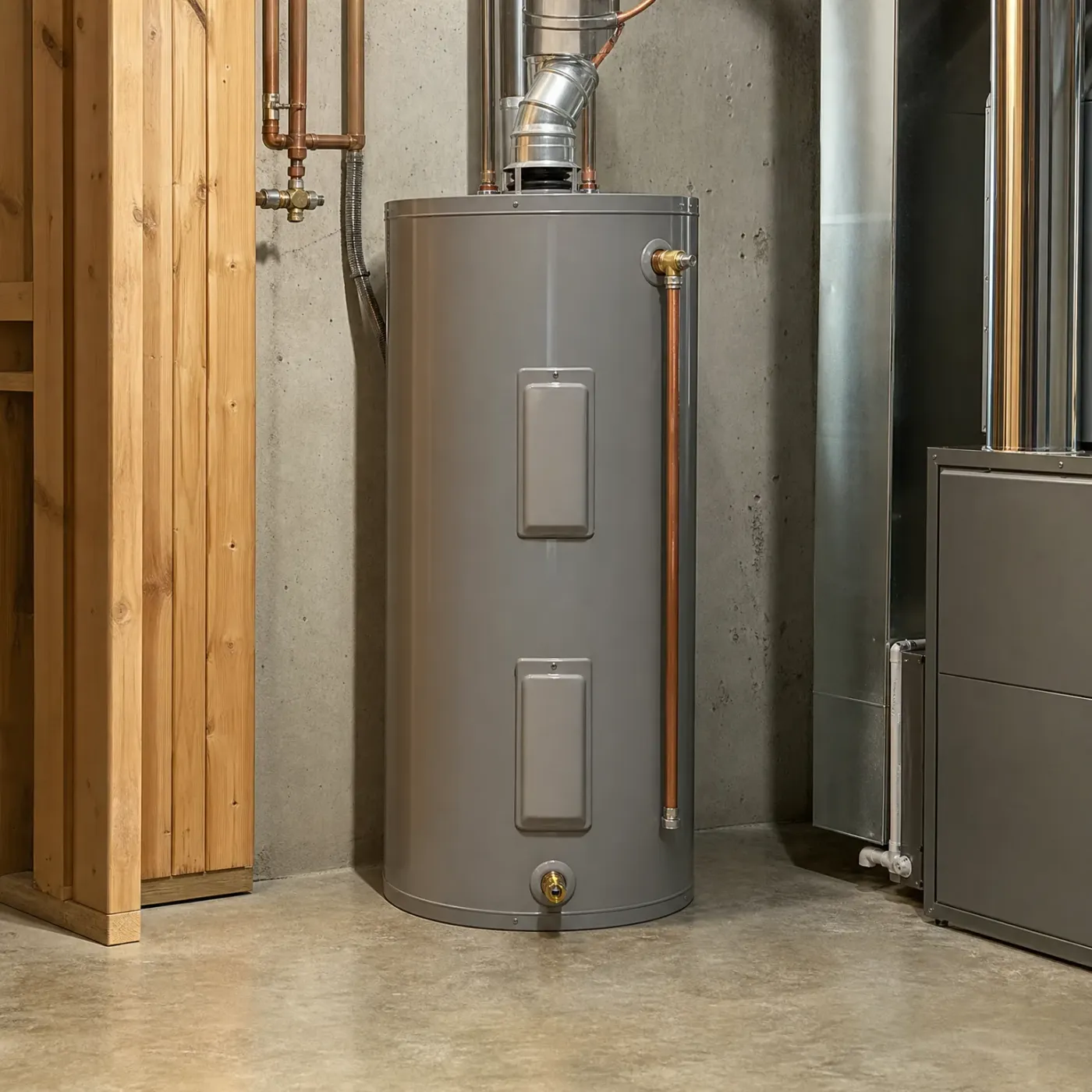
A gray cylindrical water heater with two access panels and copper piping stands against a concrete wall in a basement, beside wood framing and metal ductwork.

Flushed on schedule

This is what a tank looks like when the sediment gets drained out before it builds up. The burner underneath fires against clean steel, heats the water, and shuts off. No scale coating the bottom, no rust working through the tank. It just does the job and sits quiet until the next cycle.
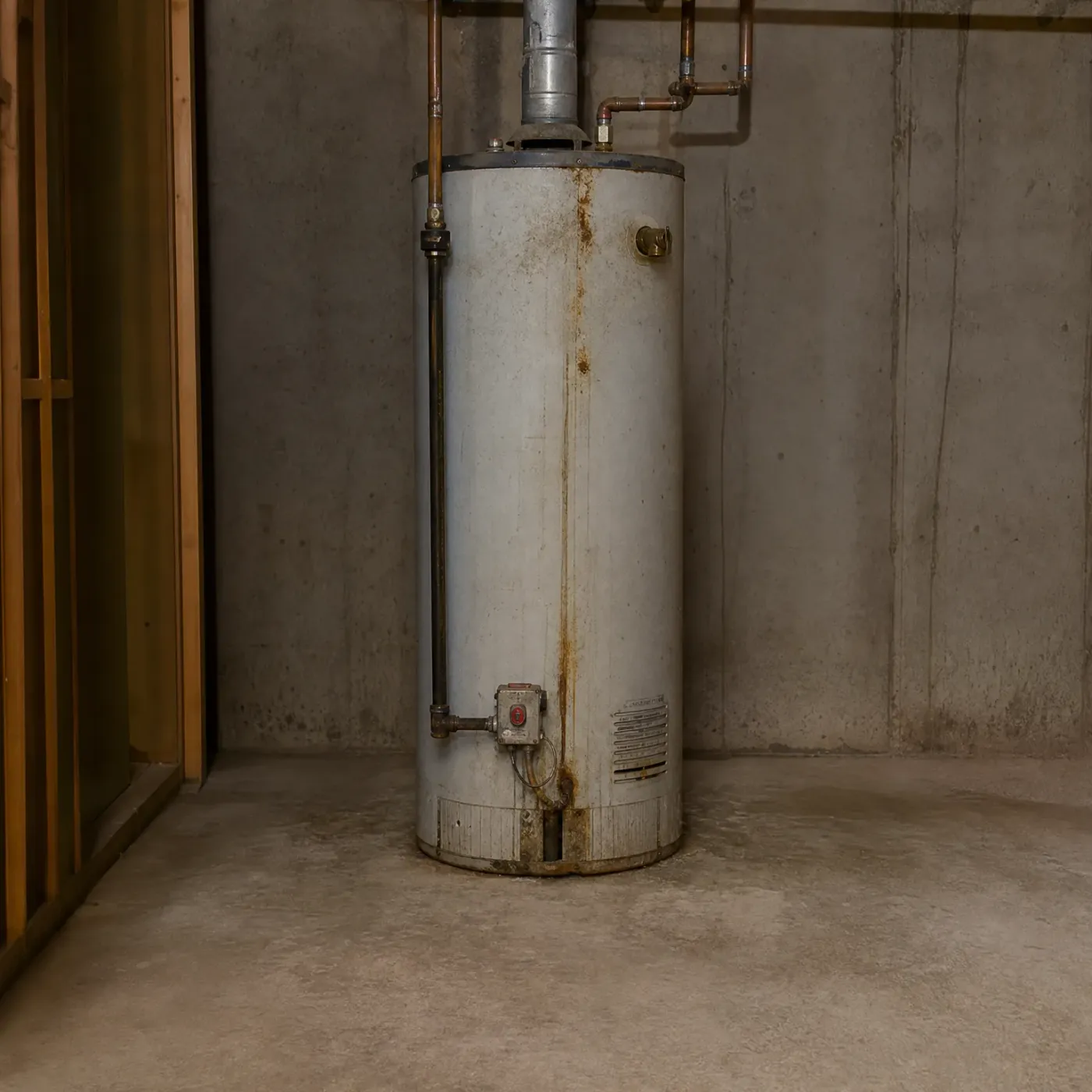

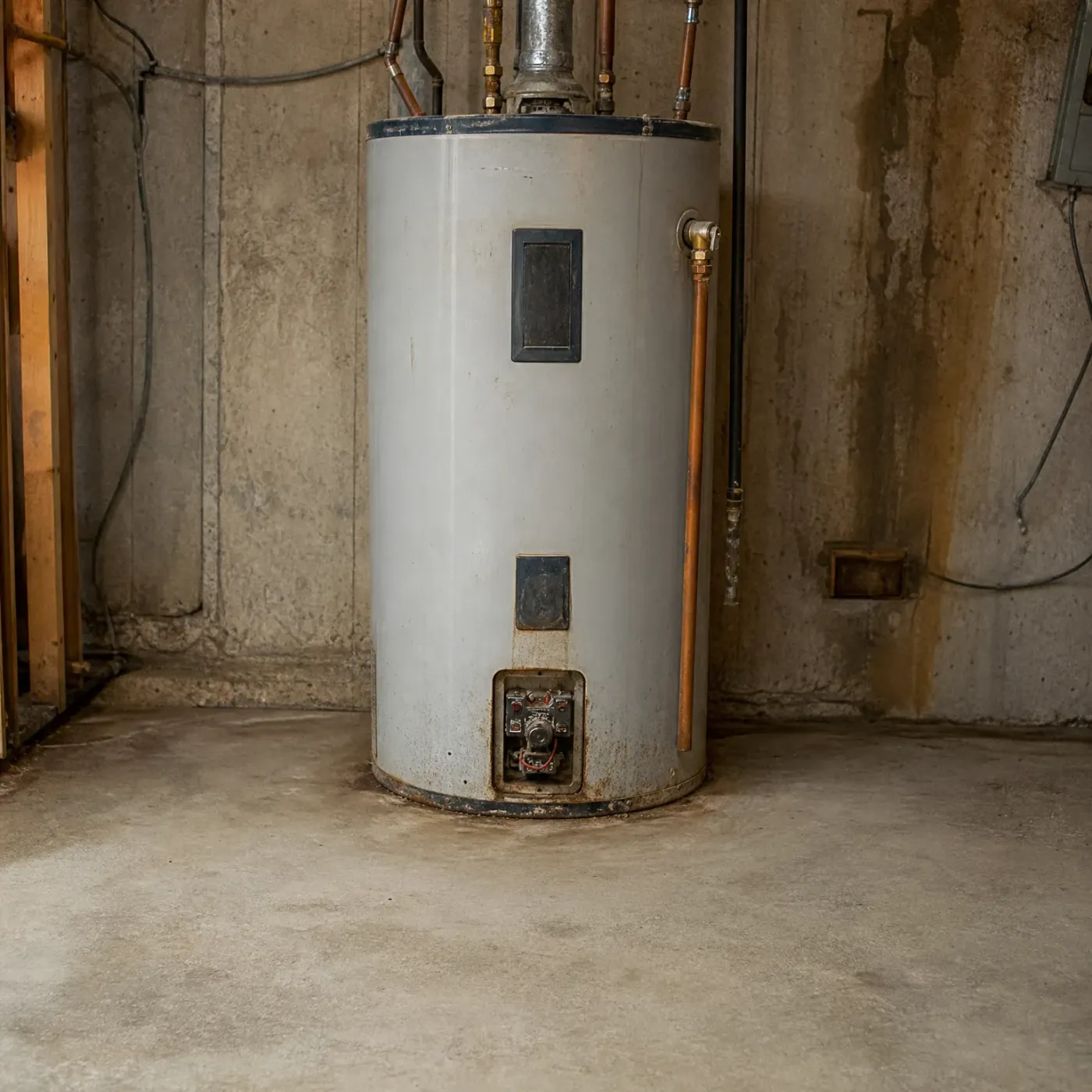
An aging rust-streaked gas water heater with copper and galvanized pipes stands against a bare concrete basement wall beside wooden stud framing.

Left alone too long

Rust like this doesn't show up overnight. It means sediment sat on the bottom for years while the gas valve kept firing through it. The flue vent and piping still look fine, but the tank underneath has been corroding from the inside the whole time.

A smiling woman with dark shoulder-length hair in a cream V-neck sweater sits at a marble counter with a glass of red wine, with a kitchen and softly lit living room behind her.
A woman in a dark green sweater laughs while seated at a marble kitchen island with a glass of red wine, with open shelving, cabinets and a living room visible behind her.
A woman with long dark hair in a cream knit sweater laughs while looking off to the side, seated at a counter with a glass of red wine, in a dimly lit living room with a sofa, lamp, framed pictures and houseplant behind her.
A smiling woman with long dark hair in a beige sweater sits at a marble kitchen counter with a glass of red wine, with a dimly lit living room behind her.

The right pro for this job

You've read what the sediment does and what it costs you in burner time and tank life. The part that's harder to carry alone is the rest of it. Finding a contractor who actually works in your part of Wyoming, calling two or three, explaining the same thing about your tank each time, waiting on quotes that don't line up. That's the work in front of you right now, separate from the flushing itself. A tank that's gone a few years without attention is worth having someone look at before you decide how often yours needs it, since that depends on your water and how the tank's been treated so far. Hand off the finding-someone part and keep your attention on the tank.

How a tank flush actually works

  • A drain valve near the bottom of the tank is where the sediment gets flushed out, usually a garden hose fitting.
  • Turning off the gas or power and the cold water supply first keeps the tank from refilling while it drains.
  • Opening a hot water tap somewhere in the house breaks the vacuum so the tank drains in a steady stream instead of a trickle.
  • Letting the water run until it comes out clear tells you the sediment is actually gone, not just the first inch of it.
  • Hard, chalky sediment that's been baking under the burner for years sometimes clogs the drain valve itself before it ever gets out.
  • Closing the valve, refilling the tank fully, and purging air from the lines before firing the burner back up protects the heating element from running dry.

Flushing a water heater is not complicated, but the order matters. The drain valve sits near the bottom of the tank, usually built to take a garden hose, since that is where the sediment collects and needs to come out. Before any of that, the gas or power gets shut off, along with the cold water supply, so the tank is not refilling while you are trying to drain it. Opening a hot water tap somewhere in the house breaks the vacuum in the system, which is why the water runs out in a steady stream instead of dribbling. You let it run until it comes out clear, not just a little cloudy, because the first inch out is rarely the whole story. In a tank that has gone years without a flush, the sediment can turn hard and chalky from sitting under the burner, and that stuff can clog the drain valve before it ever makes it out, which is its own problem to deal with. Once the tank is drained, the valve gets closed and the tank refills all the way before the burner fires again. Air in the lines needs to purge out first, through the hot tap you opened earlier, so the heating element or burner is not firing against an empty or partly empty tank. Skip that last step and you risk damaging the very thing you were trying to protect.

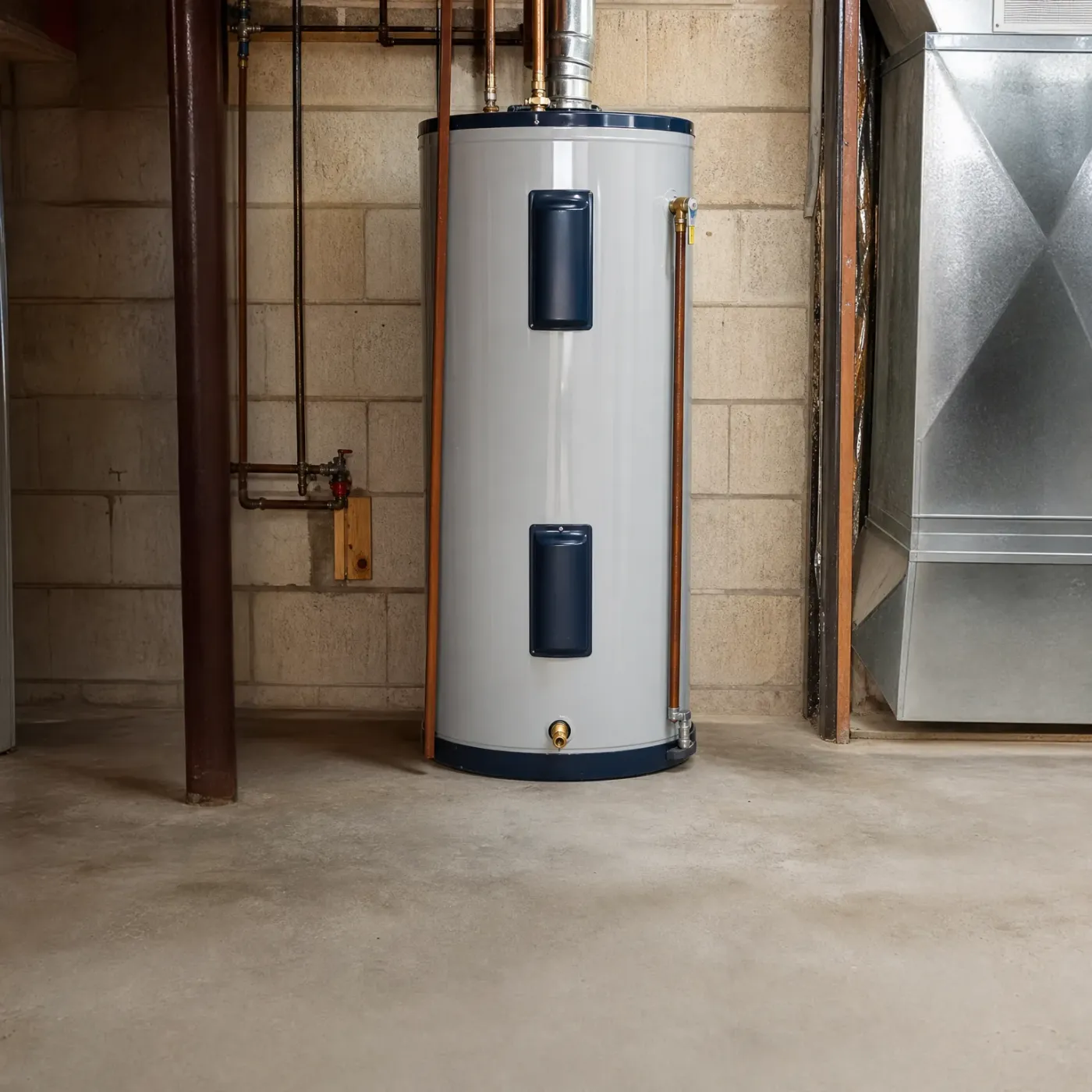
A white cylindrical water heater with two dark access panels stands on a concrete basement floor against a concrete block wall, with copper pipes, a flue duct above, and sheet metal ductwork at right.
Connected and clear, firing on clean steel with no buildup dragging on the burner.
A white cylindrical water heater with copper piping and a gas control valve stands against a stained concrete basement wall on a bare concrete floor.
Rust working through the jacket, the kind of wear a tank gets when sediment never comes out.
A smiling bearded man in a navy crewneck sweater sits at a dinner table with a glass of red wine, plates and glasses in the foreground, in a dimly lit room with a lamp and framed picture behind him.
A woman in a dark gray sweater reclines on a light sofa with eyes closed and a slight smile, under a textured gray blanket with an open book resting on her lap, with a lit table lamp and plant in the background.

59% of homes statewide heat with gas

With most homes here running on gas, that burner under the tank is what's doing the work every time sediment builds up on the bottom. A gas tank shows the strain in how long the burner runs, so flushing it keeps that burner firing against bare steel instead of a layer of scale.

ACS 2020-2024 5-year B25040

  1. Shut off the gas control or power and the cold water supply.

  2. Connect a hose to the drain valve and run it outside.

  3. Open a hot water tap in the house to let air in.

  4. Open the drain valve and let the tank empty out.

A year is the number to work from. Wyoming's mineral-heavy water means sediment builds up on a schedule, and a yearly flush keeps the burner firing against clean steel instead of a layer of scale. Skip it for a few years and the tank works harder to do the same job, quietly, until a bill or a repair tells you about it. That's the whole answer: once a year, on gas or electric, checked against whatever the manufacturer put on the tank itself. What's left is finding someone to do it, which usually means calling around, explaining the tank and the water and the symptoms more than once, and sorting through quotes that don't say the same thing twice. Getting matched with a contractor who already works on tanks like yours in your part of Wyoming skips past that. You explain it once, to someone who knows what the water here does to a tank, and they take it from there.

A gray cylindrical water heater with two access panels stands on a concrete floor in a basement beside metal ductwork, with copper pipes and a vent duct above.

Matched to your water heater job

Find a pro near me

Skip searching for a water heater pro and answer a few questions instead.

There's no charge for the request.